
- HOME
- News & Events
- Exploring Ideas and Building Networks: WPI Young Researchers Forum, Held in Tokyo
Exploring Ideas and Building Networks: WPI Young Researchers Forum, Held in Tokyo
April 22, 2026
Exploring Ideas and Building Networks: WPI Young Researchers Forum, Held in Tokyo
William Ross reports from the March 2, 2026 WPI Young Researchers Forum, the exciting, first-ever event for early-career researchers at WPI centers.
The World Premier International Research Center Initiative (WPI) is a major Japanese government initiative aimed at establishing “globally visible research centers” in Japan that can attract top researchers from around the world.
An important feature of those researchers at WPI centers, of course, is that many of them are early-career, rising talents in a variety of fields, people with talent and the drive to pursue their careers as members of the WPI centers. That fact was acknowledged with the holding of the WPI Young Researchers Forum, a gathering intended to “Explore ideas and extend networks across WPI centers.”
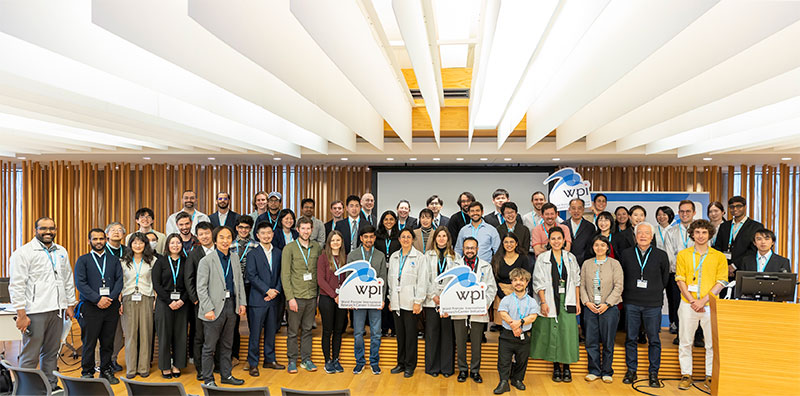
Participants gathered for a group photo at the event.
Held at the Mokuzai Kaikan in the Shin-Kiba area of Tokyo, the Forum did just that. This was the first time the event was held, bringing together some 50 participants from the 18 WPI centers. Among them, the three Forum Chairs and four Session Chairs handling the schedule were volunteers drawn from the participants. WPI Program Director UKAWA Akira opened the event by asking participants to raise their hands as he called out the names of the 18 WPI centers—a clear show of the nationwide participation at the Forum. “We planned this Forum to bring you together, to help you explore new ideas on your future in science, and also to expand your network of friends and colleagues across WPI centers,” he said. “The WPI has four missions to accomplish: world-leading science in basic research, because innovation and breakthroughs come from basic research. We’re creating a global research environment, because top scientists have to come from around the world to do world-leading science. There is institutional system reform, because science requires a world-leading research system. And we want to create values for the future including the nurturing of scientists for the next generation—because they are carriers of the future of science.”
He also stressed for the members how important the WPI project is, involving the funding of literally billions of yen by the Japanese government, and its already proven results, including five Nobel laureates emerging from the WPI centers. “Over the 19 years since its inception in 2007, and thanks to the effort of all the researchers and all the WPI centers, the WPI has acquired, I believe, an increasingly high reputation around the world.”
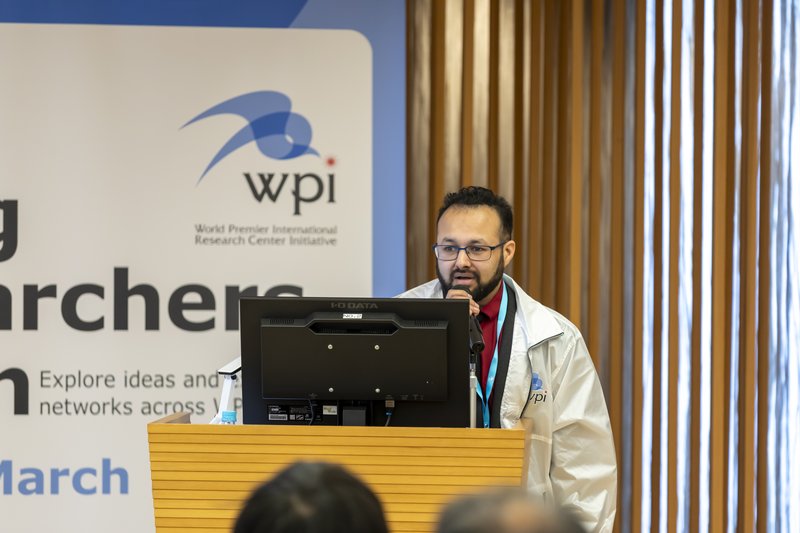
Forum Chair
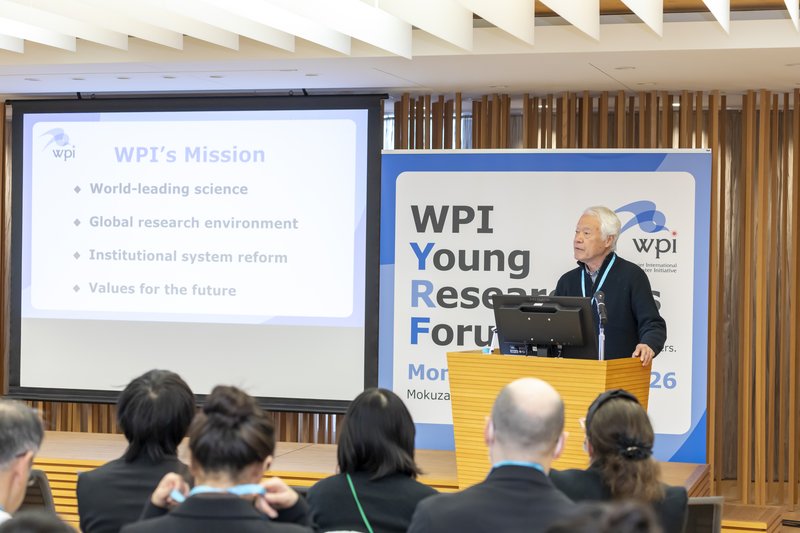
Opening remarks by UKAWA Akira, Program Director of the WPI Program
Two former WPI members then spoke. Scott Carnahan was a former project researcher at the Kavli Institute for the Physics and Mathematics of the Universe (Kavli IPMU, WPI), at the University of Tokyo, and is today Associate Professor at the University of Tsukuba. Nicola H. Perry, today Associate Professor at the University of Illinois Urbana-Champaign, was formerly WPI Assistant Professor at the International Institute for Carbon-Neutral Energy Research (WPI-I2CNER) at Kyushu University. Both gave an outline of their careers—both quite different, with Dr. Carnahan a mathematician and Dr. Perry focused on energy materials research—including the value of their work with WPI in helping to establish their careers, which, for Dr. Carnahan, including remaining in Japan. “The ability to talk to people in other fields is a big part of WPI,” Dr. Carnahan said. “Talking to people in neighboring fields was something that was just wonderful for me. Talking to them didn’t really give me new collaborations or result in new papers, but it gave me lots of ideas, better context for some of the things that I was already trying to do in my own papers. I was able to improve the papers because of this interaction.”
Dr. Perry also spoke about the broadening of her experiences and career that came from joining WPI in Japan. “I was really interested in gaining the international experience, rather than just staying in the U.S.,” she said. “I got to go back to fuel cells and materials interfacing with hydrogen, in which Japan is really world-leading. The other great thing about this dual position [between Kyushu University and MIT] was it brought together all my past research experiences. It really just felt like it was tailor-made for me. I had lots of time to focus on research—something I appreciate more now that I have less time to do that. I was able to apply for some of my own funding, and I was able to choose my own research directions. We could attend international conferences, and at that stage of my career, the visibility was so important.”
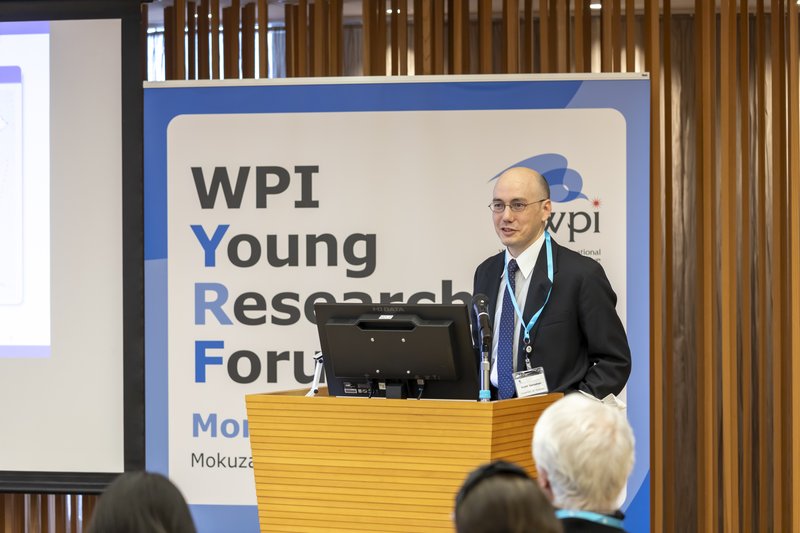
Dr. Scott Carnahan, Associate Professor, University of Tsukuba
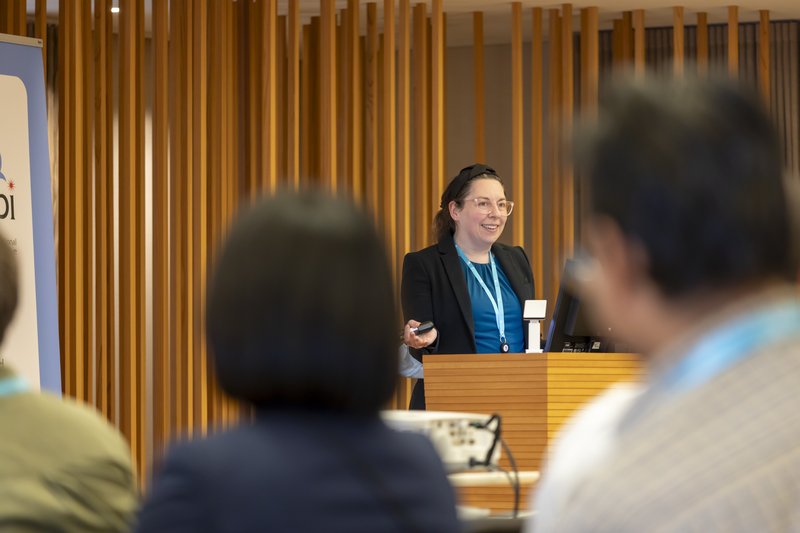
Dr. Nicola H. Perry, Associate Professor, University of Illinois Urbana-Champaign
The session then broke into two groups in two meeting areas. Nine researchers in each room gave five-minute introductions to their research work to the other participants, followed by a few minutes for Q&A. These covered diverse fields in all areas of scientific research, ranging from neuroscience to astrophysics. These were carefully attended to by the participants, who followed up with questions regarding the presentations. The presentations were followed by a poster session with coffee—the posters being visual and textual versions of the presentations given. The immediate engagement of the early-career researchers with each other showed the interest they had in their colleagues’ work.
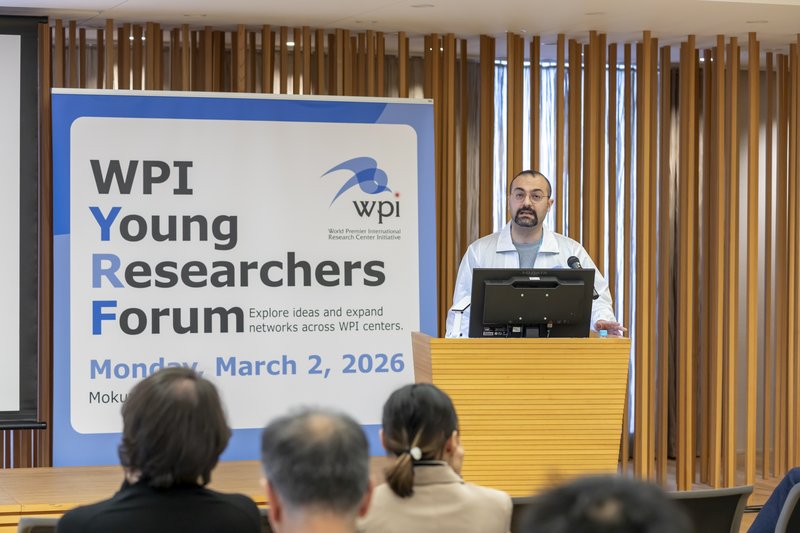
Presentation by WPI researcher
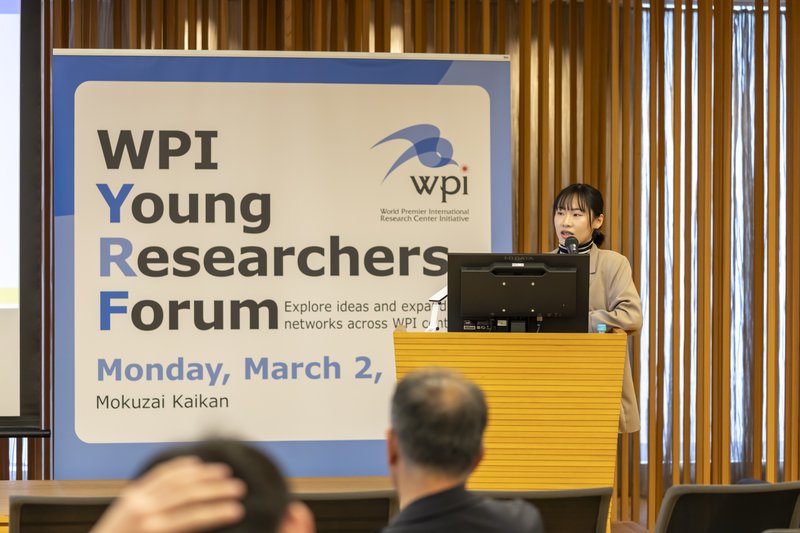
Presentation by WPI researcher
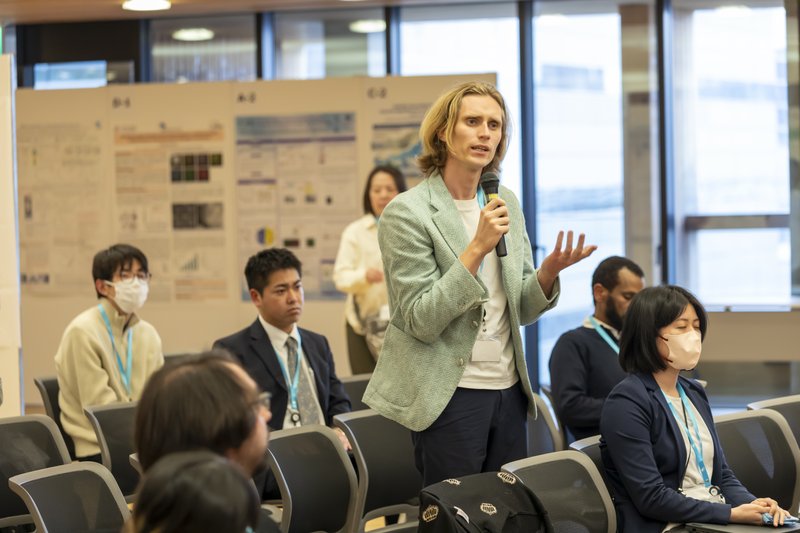
Q&A session
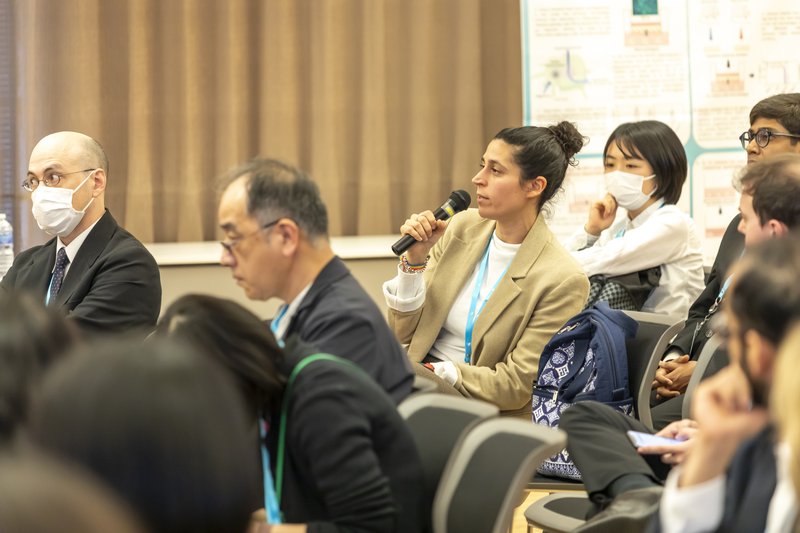
Q&A session
This was followed by a second session of presentations and a poster session, with much the same results. It was interesting to listen in as discussions moved from a particular poster, for example, to discussions about each person’s own work, and even sharing information about their work places and the cities where they live. These were in the very best sense open and clearly enjoyable discussions for the researchers, information sharing that will create stronger ties between them and to the WPI.
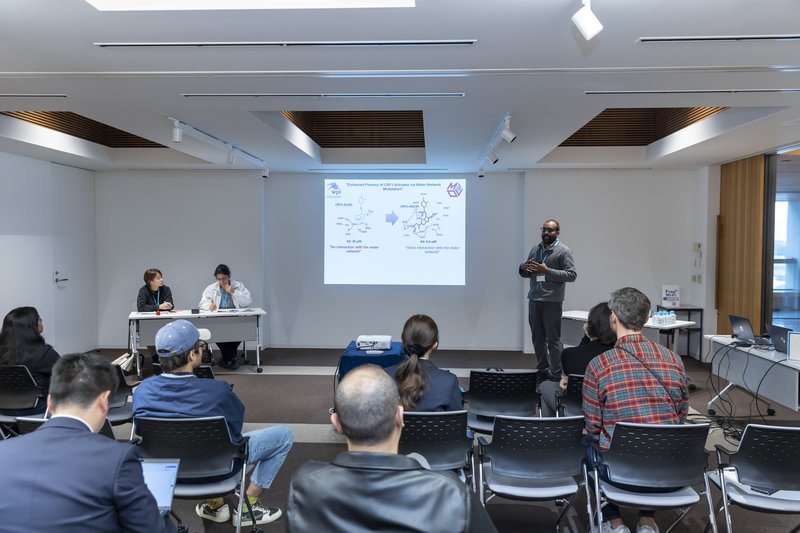
Presentation by WPI researcher
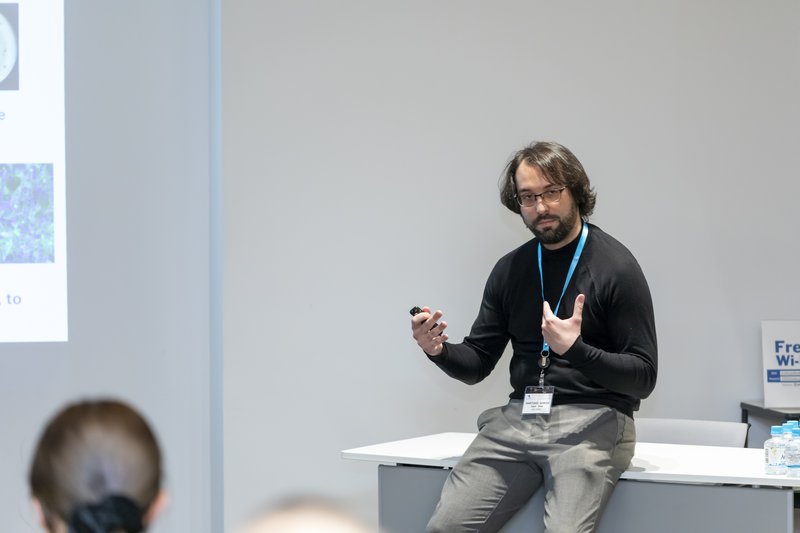
Presentation by WPI researcher
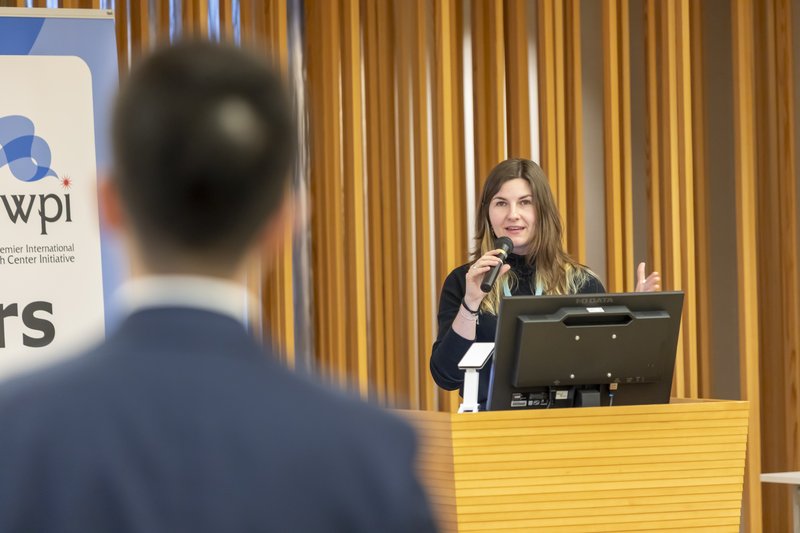
Q&A session
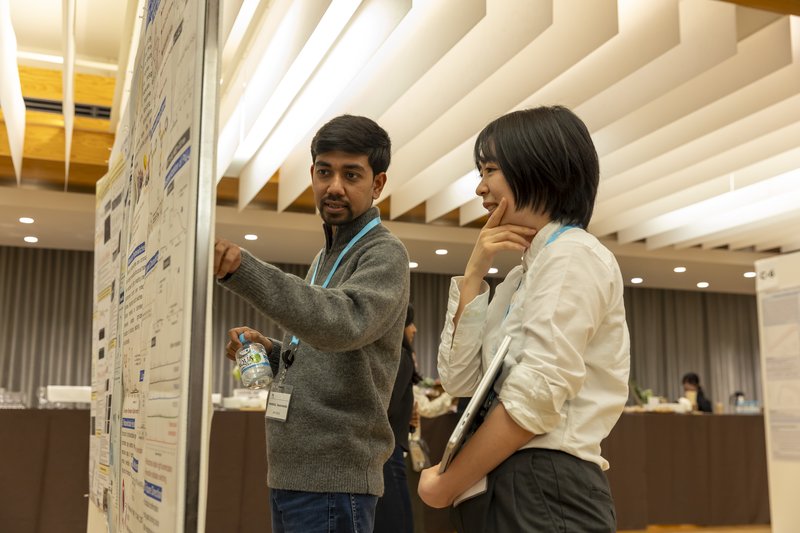
Poster session
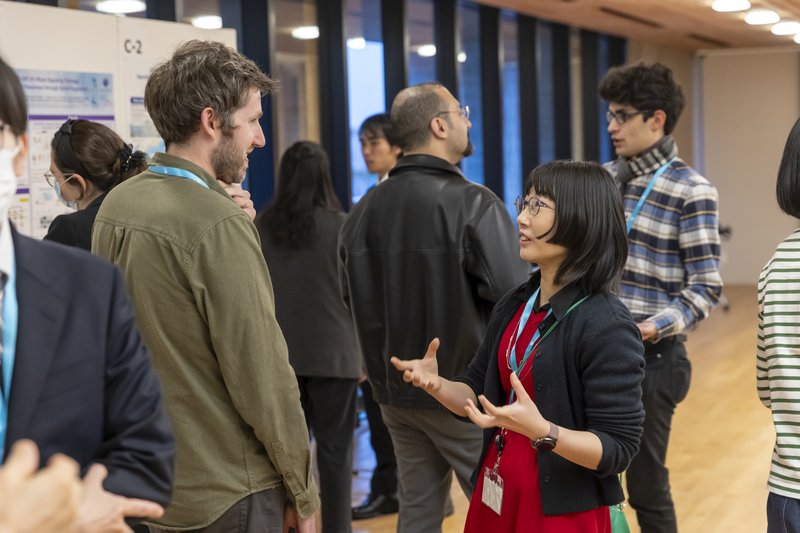
Poster session
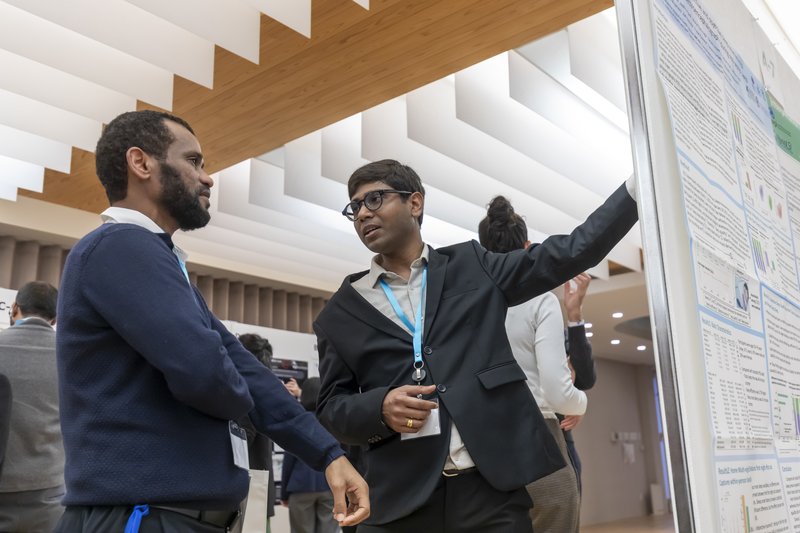
Poster session
So there was no need to encourage people to engage in discussions, as the researchers easily moved into conversation—something that picked up further as food and drinks were set out in the room.
A researcher described her reaction to her colleagues’ presentations. “When the presentation was close to my field I understood what they were describing, but some were quite far from my research! But it didn’t matter that perhaps I didn’t understand everything. It was exciting to see what people across WPI are doing, and I felt closer to the other centers, which are all over the country. I can say I learned some new things today!”
Another participant met while he was scanning some of the posters agreed with the value of WPI researchers gathering together to share ideas and experiences. “The special talks were helpful for me as I think about my future career,” he said. “It was also a wonderful opportunity to be able to speak directly with some of the senior researchers, as well as some of my peers who I had not previously met.”
KAIBUCHI Kozo, Deputy Program Director of WPI, echoed their thoughts as he gave the kanpai toast to officially kick off the networking session. “I am happy to see people from many different fields talking together already,” he said. “I think this event has been a very good chance for all of you to meet with your WPI colleagues from around the country, and exchange ideas in areas outside of your own fields.” It wasn’t just to be able to meet, of course; one of the key concepts behind this event was to further the kind of new thinking that comes from gaining insight from outside one’s own area of research. And that is a key concept for WPI.
After glasses were raised for the kanpai, the group continued in lively conversations that continued out into the Shin-Kiba streets even after the very successful event had concluded.
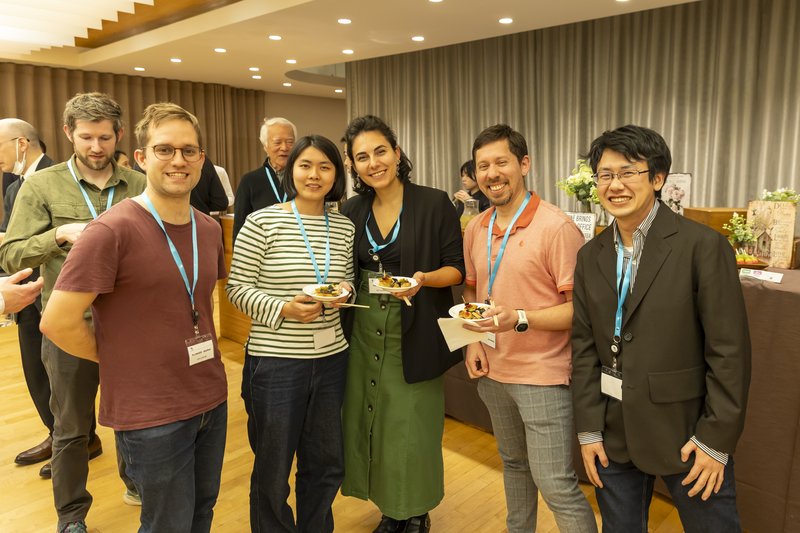
Networking session
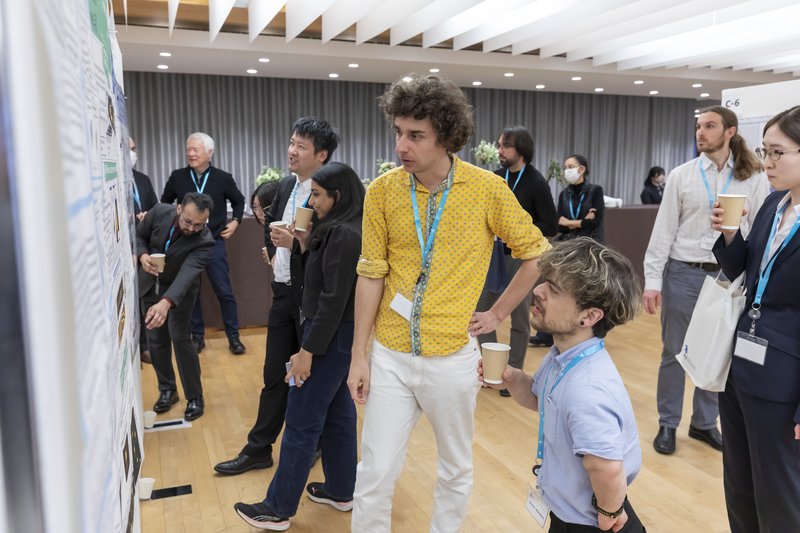
Networking session
William Ross is a Japan-based writer and editor contributing to a number of online and print publications in the country and abroad.