
- HOME
- HOME-English
- Careers
- Researchers Voice
- Collaborating with Global Colleagues (and Local Babies) on Language Acquisition Research:
Irena Lovčević at WPI-IRCN
Collaborating with Global Colleagues (and Local Babies) on Language Acquisition Research:
Irena Lovčević at WPI-IRCN
Apr 6, 2026
Collaborating with Global Colleagues (and Local Babies) on Language Acquisition Research: Irena Lovčević at WPI-IRCN
Irena Lovčević studies how environmental factors influence language acquisition and early cognitive development. Born in Serbia, she earned her Ph.D. in Sydney, Australia, before working as a postdoctoral researcher at the International Research Center for Neurointelligence (WPI-IRCN), the University of Tokyo Institutes for Advanced Studies (UTIAS), from 2020 to 2025. Now embarking on the next stage in her career, Lovčević spoke to us about how WPI-IRCN helped her pursue new research, expand her global network, and find new ways to bring her findings to the parents who need it most.
Note: Interviewed in December 2025. Positions and titles are current as of the time of the interview.
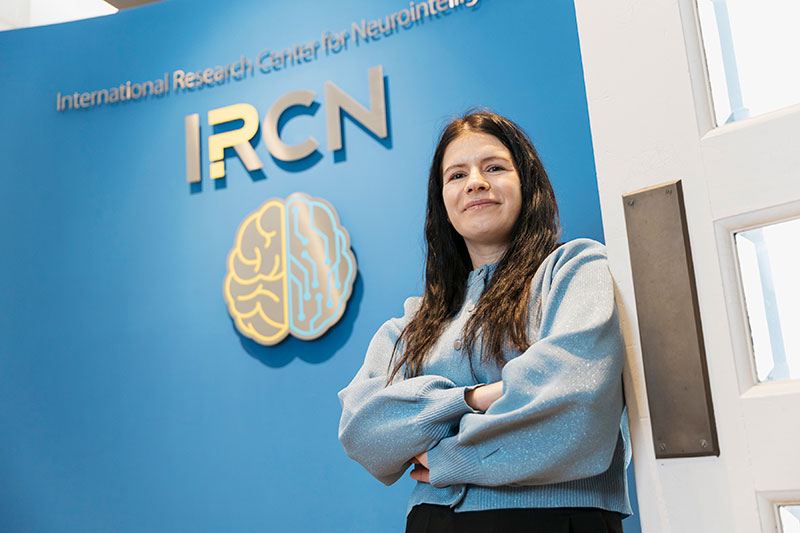
Baby Talk and the Secrets of Human Intelligence
Established in 2017 as a WPI center within the University of Tokyo Institutes for Advanced Studies (UTIAS), WPI-IRCN is directed by Professor Takao Hensch. The center seeks to understand human intelligence by exploring neurodevelopment and how it is affected by psychiatric disorders, with the ultimate mission of creating a new discipline at the interface of human and artificial intelligence. Lovčević was part of the team at WPI-IRCN’s “Babylab,” run by TSUJI Sho, currently PI at WPI-IRCN and Associate Professor at CNRS and École Normale Supérieure, where researchers study how family and other environmental factors influence language acquisition in infants.
“Professor Tsuji’s approach aligned closely with my interests,” says Lovčević. She was particularly drawn at first to Babylab’s research involving data gathered by “Babyloggers”—devices that sit in the pocket of a special vest worn by infants, recording their speech over extended periods in their home environment. “My past research had used ten-minute recordings of mothers and babies in the lab, which is not the same because they can behave differently than at home—and ten minutes is nothing! So I really liked the project idea. I also appreciated the emphasis on interdisciplinary and international collaboration.”
From Serbia to Sydney
Lovčević’s interest in psychology began with a class in her second year of high school—and a teacher who went beyond the textbook, reading new papers in the field and explaining them to his fascinated class. “I was very motivated by that; it made me want to study psychology, too. He’s still reading today, including my publications.”
In 2012, Lovčević earned her master’s degree in Psychology at the University of Novi Sad in Serbia. Her thesis was on how adults process adjectives, and during her work she realized that many psycholinguistic questions in this area could only be answered by studying speech acquisition in babies. After a short break from academia working in the NGO sector, she completed her Ph.D. at the MARCS Institute for Brain, Behaviour and Development at Western Sydney University.
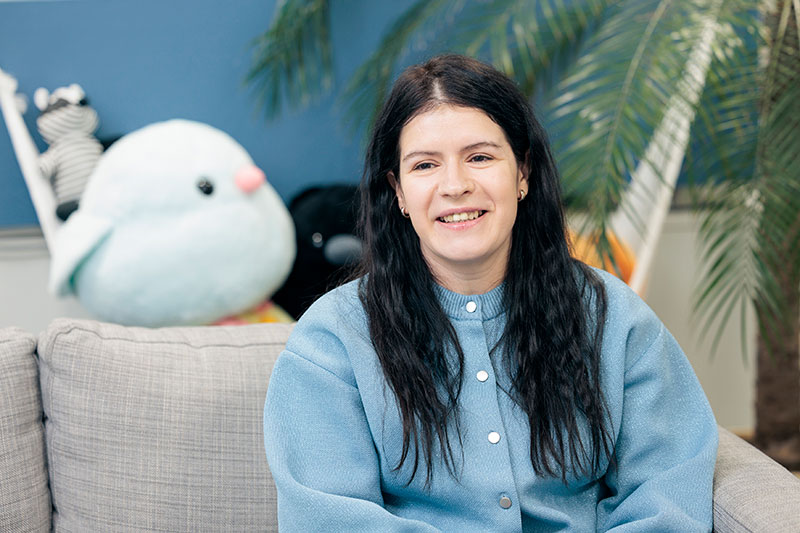
Lovčević at Babylab. The lab is stocked with stuffed toys to help calm its “baby researchers.”
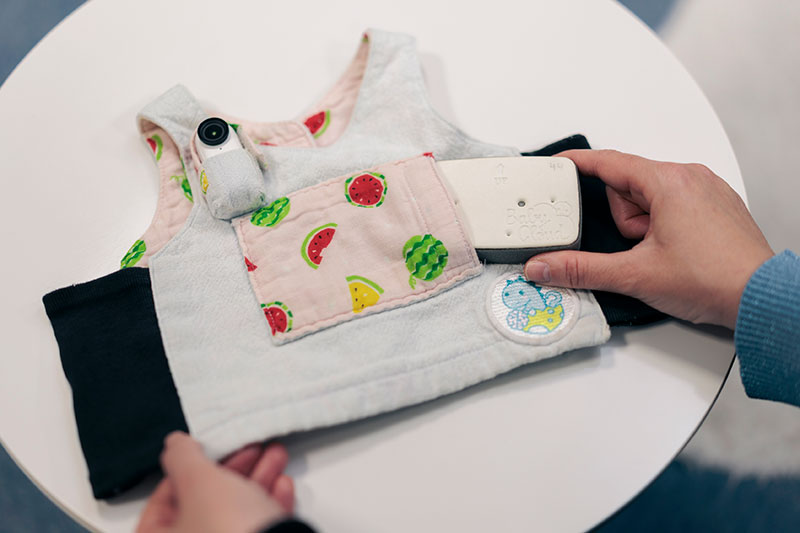
The BabyLogger, which records children’s vocalizations and other people’s speech input, fits into the pocket of an infant research vest.
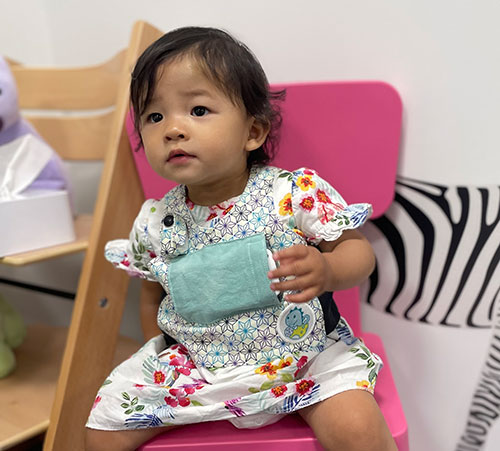
A “baby researcher” wearing an infant research vest. Babylab welcomes infant and child participants aged 0 to 6 who are interested in joining its studies.
Making the Jump to Japan
When it came time to choose a postdoctoral path, Lovčević began searching for opportunities to continue her work. This led her to WPI-IRCN—specifically, to a postdoctoral position in Professor Tsuji’s Babylab gathering data using “Babyloggers” and conducting lab experiments to assess milestones in language development.
“I was already an admirer of Professor Hensch’s work on critical periods,” says Lovčević. “The position sounded fascinating, so I had an interview with Professor Tsuji and found that their approach resonated with me strongly. They offered me a position as a postdoctoral researcher, and I happily accepted.”
Not knowing any Japanese, Lovčević was initially nervous about how she would adapt to life in Japan. However, she says, WPI-IRCN provided assistance with everything from everyday chores like opening bank accounts and shopping to work tasks like recruiting research subjects. Research collaborations, meetings, and paper writing were all conducted in English, ensuring a smooth transition.
“Ultimately, Japanese was not necessary for me to pursue my research at WPI-IRCN,” says Lovčević. “Of course, learning some Japanese has helped me make friends and socialize outside the lab.”
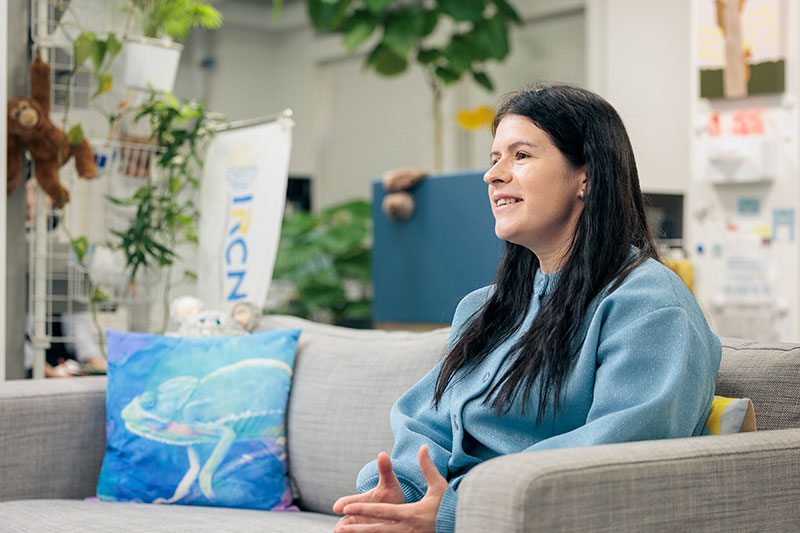
Lovčević was anxious about arriving in Japan at the height of the COVID-19 pandemic, but WPI-IRCN’s administrative staff were happy to communicate through online meetings, putting her at ease.
A Collaborative, International Environment
Lovčević found WPI-IRCN to be a highly international environment where she could connect with researchers from around the world. She was also impressed by its emphasis on collaboration and interdisciplinary work. The institution regularly welcomes visiting researchers who stay for months, allowing for genuine exchange of ideas and approaches. Seminars, symposia, and networking events create further opportunities for expanding professional networks. WPI-IRCN has built a global network of 20 partner institutions, and researchers are encouraged to work together on projects connecting fields ranging from biology and medicine to information science and linguistics.
“Working here has let me pursue collaborations that I wouldn’t even have thought possible, such as joint projects between Babylab and the robotics lab,” she says. “This enriched my research with new ideas. I was very shy as a Ph.D. student, but at WPI-IRCN I learned how to network and collaborate. I felt completely supported, and I’m very happy with my network now.”
Lovčević also learned other useful skills at WPI-IRCN that made her a more effective researcher. “Professor Tsuji is highly supportive of open science, and when I see how common this is in Europe now, I’m glad that I learned it at WPI-IRCN,” she says. “She also taught me to write grants—I’ve applied for three in my career so far, and been awarded all three.”

Lovčević in discussion with colleagues. WPI-IRCN’s “team science” approach to promoting interdisciplinary research strongly resonated with her.
Looking Ahead: Collaboration on Projects to Help Real Parents
In late 2025, Lovčević left WPI-IRCN to work as a JSPS International Research Fellow at the Minagawa Lab at Keio University. Though excited about doing research in other countries eventually, she has no immediate plans to leave Japan. In fact, the environment at WPI-IRCN is so international that she believes she had more opportunities to meet researchers from around the world than she expected.
“Last year, WPI-IRCN organized a symposium with the Scuola Normale Superiore di Pisa (SNS) in Italy,” says Lovčević. “During that symposium, a professor from Italy presented his work on language development in children with hearing loss. I work on babies, not children, but I was intrigued by his research. Professor Tsuji and Professor Hensch encouraged me to pursue that interest, finding a grant if necessary, and today I am collaborating with him. It’s not every institute that offers opportunities like that. If you respect other cultures and are eager to learn about them, I think a WPI center position is an excellent opportunity,” she says.
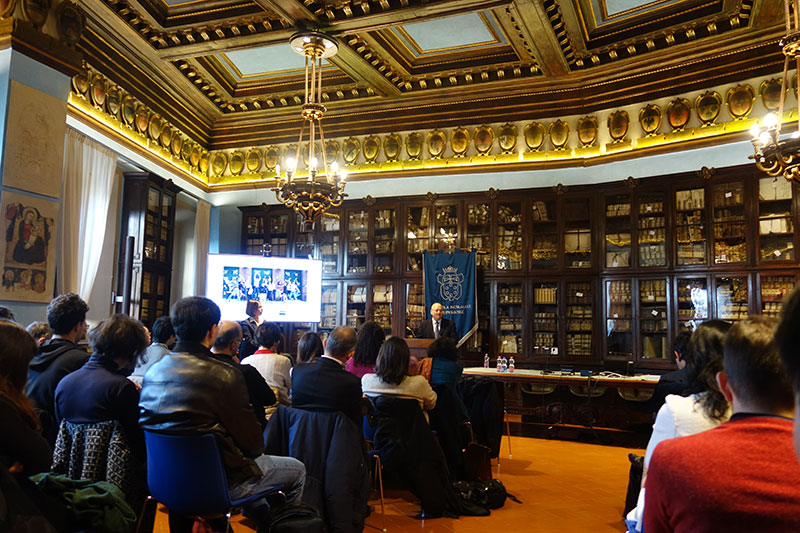
A symposium promoting research exchange and international collaboration between WPI-IRCN and SNS, held in the lecture hall of the Palazzo della Carovana, a building with more than 460 years of history. (Photo: WPI-IRCN)
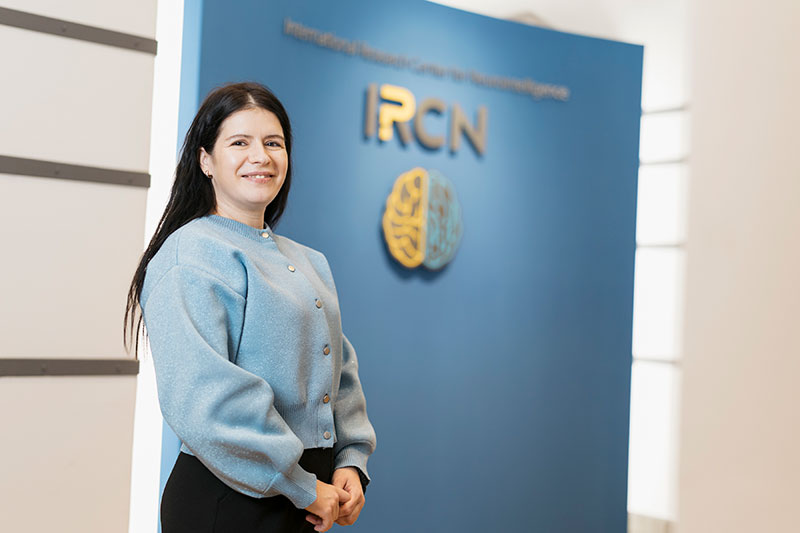
Irena Lovčević
Irena LovčevićPh.D., Western Sydney University, MARCS Institute for Brain, Behaviour and Development (2019)
Postdoctoral Researcher, WPI-IRCN BabyLab, The University of Tokyo, (2020–2025)
JSPS International Research Fellow, Keio University (2025–)