
- HOME
- Careers
- Researchers' Voices
- Intellectual Diversity Fosters Innovative Approaches to the Origins of Life: Hye-Eun Lee at WPI-ELSI
Intellectual Diversity Fosters Innovative Approaches to the Origins of Life: Hye-Eun Lee at WPI-ELSI
Jun 8, 2026
Intellectual Diversity Fosters Innovative Approaches to the Origins of Life: Hye-Eun Lee at WPI-ELSI
Note: Interviewed in January 2026. Positions and titles are current as of the time of the interview.
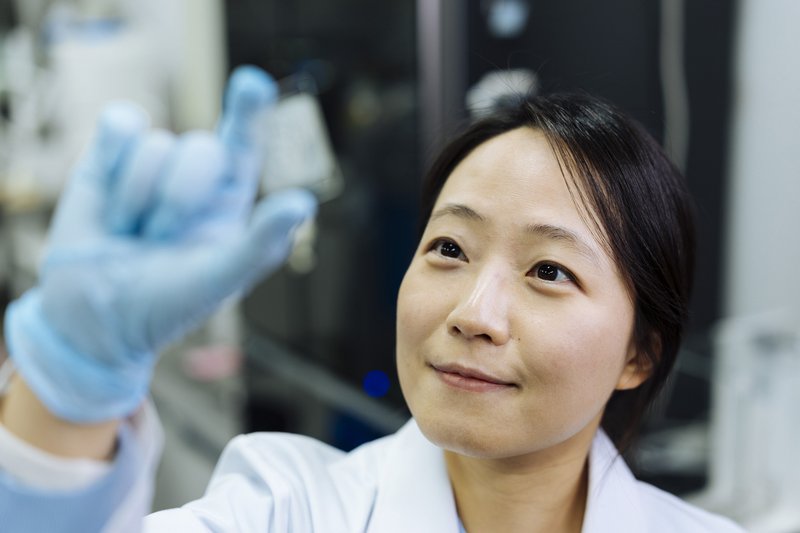
Hye-Eun Lee, Specially Appointed Assistant Professor in Materials Science at the Earth-Life Science Institute (WPI-ELSI), Institute of Science Tokyo.
A Bridge Between Past and Future
Lee’s current research focus is hydrothermal vents—seafloor systems where heated, mineral-rich fluids are released into the ocean and form complex structures. The chemical elements and compounds in these undersea water plumes, and the nanostructures of the vents themselves, may have contributed to the emergence of Earth’s first living things.
Lee has been drawn to science since she was a child “mixing things in vials,” but her interest in hydrothermal vents dates to her time as a postdoctoral researcher at RIKEN, Japan’s national comprehensive research institute, from 2019 to 2023.
“That was the first time I encountered this exciting field,” says Lee. “Initially I focused on the vents’ material properties, but I became intrigued by the proposals that hydrothermal vents might be where life on Earth originated, with their nanostructures acting as chemical reactors.” And, she adds, because SEKINE Yasuhito, Director of WPI-ELSI, has demonstrated experimentally that hydrothermal vents could also exist on Enceladus, one of the moons of Saturn, this research could tell us more about life elsewhere in the universe as well.
It could also have entirely novel applications. “Studying how cells and complicated systems evolved from the simplest chemical resources could be helpful for developing sustainable technology,” says Lee. “I see my research as a bridge that connects the past and the future.”
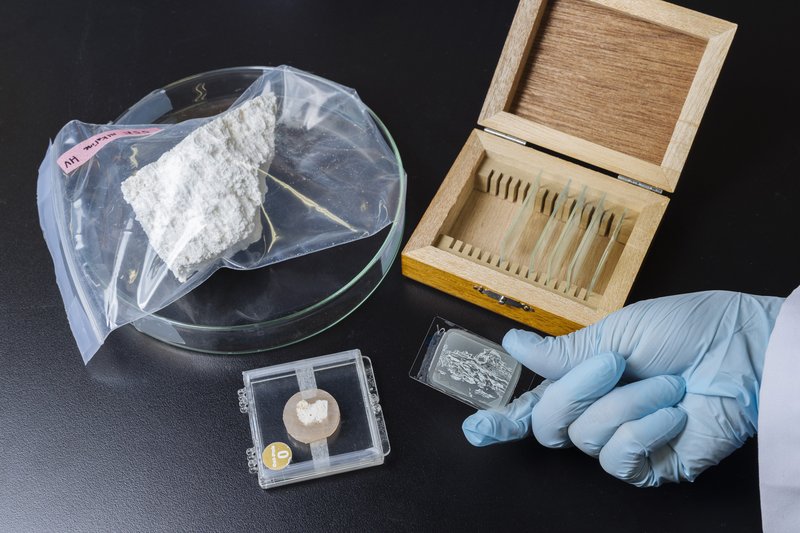
Materials sampled from hydrothermal vents in the Mariana Trench, 5,700 m below the sea surface. Lee was part of the international research team led by NAKAMURA Ryuhei that analyzed these samples and found that most contained nanostructures.
Note: This research was conducted as a collaborative study between OKUMURA Tomoyo, OHARA Yasuhiko, and YAMAMOTO Masahiro. The samples (Sample ID#12541-14001_6K1404-R05) collected during a research cruise were used. This cruise was conducted under a Special Use Permit (Permit No. 12541-14001) issued by the U.S. Fish and Wildlife Service for research within the Mariana Trench Marine National Monument.
Cultivating Diversity and Fostering Serendipity
One thing Lee appreciates about WPI-ELSI is its diversity. “People from lots of different fields, from nanoscience to planetary science, come together to talk about the origin of life,” she says. “I’ve never seen this kind of environment before—it’s a rare experience. The discussions expand my research boundaries and bring new insights.”
WPI-ELSI’s seminars invite outside speakers for even greater intellectual diversity. “Recently we had a philosopher discussing the definition of life from a historical perspective,” says Lee. “Another memorable lecture was about biology—protein engineering, protein modification, and how complicated structures form. The range is very broad. But think of the way Leonardo da Vinci’s study of science and anatomy made it possible for him to create breakthrough artistic masterpieces like the Mona Lisa. By connecting the dots between fields, you can see the bigger picture.”
Before some weekly seminars, a “coffee break” is hosted by WPI-ELSI faculty, providing an opportunity for visitors and researchers to mingle freely. These are held in the Agora, an airy space on the second floor of the ELSI-1 building specifically designed to encourage spontaneous communication. “Sometimes students even open an izakaya in here, making takoyaki or okonomiyaki,” laughs Lee.
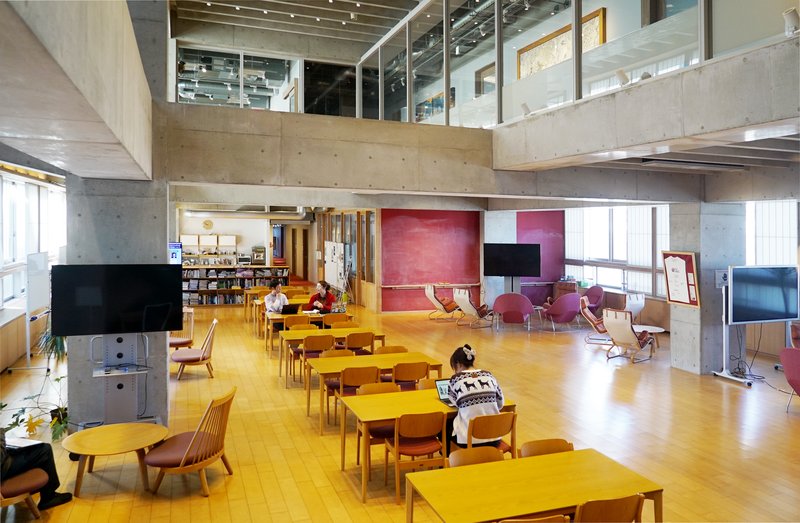
WPI-ELSI Agora (2nd floor) is an open space designed to encourage collaboration, open discussion, and social interaction. The Agora hosts regular study groups, workshops, and social gatherings, including conference dinners and student-led activities such as “Izakaya,” where students come together informally after work hours. (Photo: WPI-ELSI)
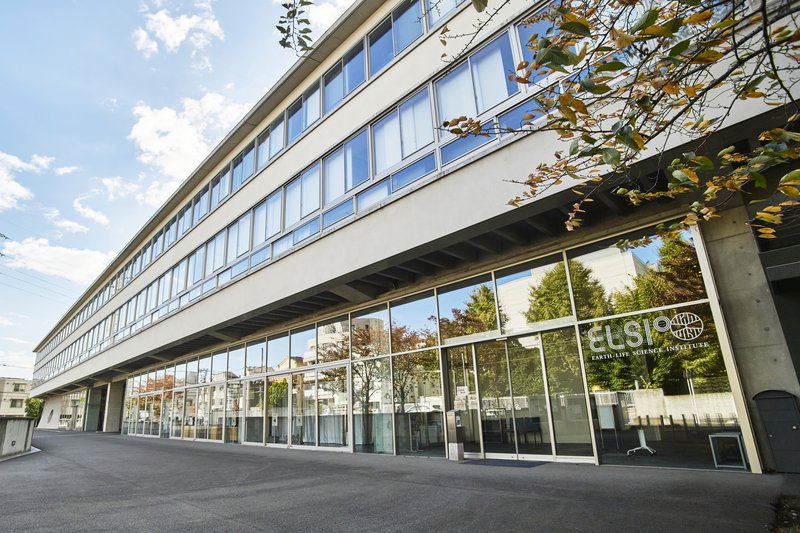
WPI-ELSI is a unique research institute bringing together top-class researchers from Japan and around the world in Earth science, life science, planetary science, and other fields to explore the origins of Earth and life. (Photo: Seiji Mizuno)
The Power of Socratic Ignorance
The Agora is named after the space for public assembly in the city-states of ancient Greece. In another echo of ancient Greece, WPI-ELSI also embraces “Socratic ignorance”: the willingness to admit when one does not know something, and then seek to understand it.
“One of the appealing points of WPI-ELSI is that we are very open to saying ‘I don’t know,'” says Lee. “If a scientist says that, it often feels like a weakness. But here we come from different fields, so it’s natural that our knowledge doesn’t overlap completely. Acknowledging what we don’t know is a starting point for discussion that makes new connections and leads us to bigger questions. By developing this intellectual muscle we can refine our ideas and advance our research.”
This emphasis on seeking new perspectives extends to WPI-ELSI’s philosophy of writing papers. Rather than focusing solely on predefined problems, WPI-ELSI encourages broader, question-driven exploration that can open new conceptual directions.
“It’s exciting because I can grow more intellectually and open new directions for readers,” says Lee. “It does mean fewer papers overall, but WPI-ELSI evaluates people based on research narratives, not simple publication metrics. That gives me the security to do long-term research, which can really be very original.”
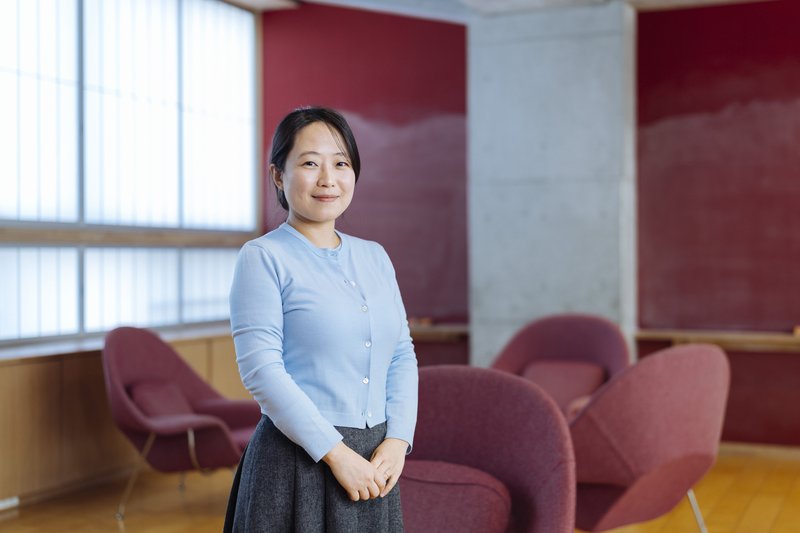
“At WPI-ELSI, admitting that you don’t know something isn’t stressful,” says Lee. “It’s stimulating—the first step to augmenting your knowledge with something new.”
A Welcoming Environment for Intellectual Courage
When Lee came to Japan, she had two worries: language and earthquakes. Fortunately, at WPI-ELSI, she had no issue communicating with other people. “This is also important if there is an earthquake! Having an English environment made me feel safer.”
In general, she says, the support from the administrative staff and secretaries was extensive and exemplary. “I’m very grateful for their support—without them, I couldn’t survive!”
For those interested in WPI-ELSI, Lee says, connecting with scientists working there is key. “We have a WPI-ELSI symposium every year, and attending that symposium is a good way to begin building connections. Our visitor program is also a way to get to know more about the WPI-ELSI environment.”
Once at WPI-ELSI, Lee says, the intellectually demanding environment and constant exposure to new information require a willingness to seize opportunities.
“WPI-ELSI is an unparalleled place for academic growth,” says Lee. “You encounter many challenges that reshape your thought processes. You have to be bold and brave enough to go beyond your comfort zone.”
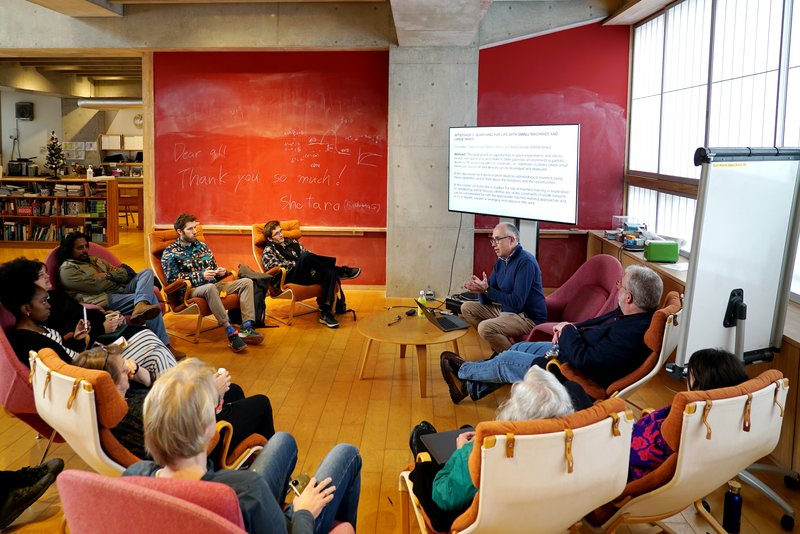
At an “aftershop,” a series of smaller, more focused follow-up sessions to the ELSI International Symposium, 2025. (Photo: WPI-ELSI)
Creating Scientific Fields Where No One Has Gone Before
As for Lee’s own future, her current interests lie in “integrating nanochemical knowledge into the origin-of-life field,” she says. She is particularly interested in applying recent advances in nanochemistry, such as finding that water behaves differently at the nanoscale.
“A professor told me once that a professorship is not just a title—it identifies a person who can lead the field,” says Lee. “I’m trying to build momentum toward establishing—and eventually leading—an entirely new field.”
WPI-ELSI’s culture of encouraging interdisciplinary collaboration and creativity in service of bold intellectual goals brings ambitions like this within reach for researchers.
Hye-Eun Lee
Ph.D. in Material Science and Engineering, Seoul National University (2017)Postdoctoral Researcher, Seoul National University (2017–2019)
Postdoctoral Researcher, RIKEN Center for Sustainable Resource Science (2019–2020)
Special Postdoctoral Researcher (independent researcher), RIKEN Center for Sustainable Resource Science (2020–2023)
Specially Appointed Assistant Professor, WPI-ELSI, Institute of Science Tokyo (2023–)