
- HOME
- Careers
- Researchers' Voices
- Unraveling the Nature of Sleepiness in a Global Research Environment: IWASAKI Kanako at WPI-IIIS
Unraveling the Nature of Sleepiness in a Global Research Environment: IWASAKI Kanako at WPI-IIIS
May 21, 2026
Unraveling the Nature of Sleepiness in a Global Research Environment: IWASAKI Kanako at WPI-IIIS
Note: Interviewed in January 2026. Positions and titles are current as of the time of the interview.
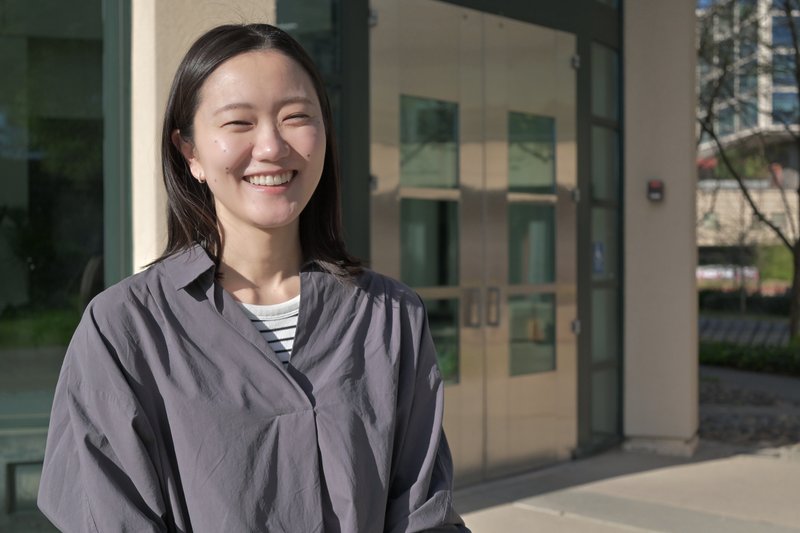
IWASAKI Kanako laid the foundation of her research career at WPI-IIIS, University of Tsukuba, and now continues her work as a postdoctoral fellow at Stanford University. (Photo: Iwasaki Kanako)
Searching for the Mechanisms that Make the Brain “Sleepy”
“Around the time I was considering college options, WPI-IIIS had been selected for the WPI program and a brand-new research building had just gone up. The words ‘world-class institute’ caught my attention. I wanted to know what ‘top-class researchers’ were like and how they worked. I thought it would be an exciting place to be,” says Iwasaki, explaining why she applied for a place at WPI-IIIS.
WPI-IIIS is a research institute that focuses on “the science of sleep.” It is highly distinctive in its integration of neuroscience, pharmaceutical science, and experimental medicine to elucidate the function and control mechanisms of sleep—one of the central unresolved questions facing modern neuroscience. The institute is headed by YANAGISAWA Masashi, who received the 2023 Breakthrough Prize in Life Sciences for his discovery of orexin, a neuropeptide that regulates sleep–wake states, and for elucidating the pathophysiology of narcolepsy, a disorder characterized by excessive daytime sleepiness.
Up through her years as a doctoral candidate at WPI-IIIS, Iwasaki belonged to the Yanagisawa/Funato Laboratory, where she studied the true nature of “sleepiness.” She dedicated herself to uncovering the intercellular brain mechanisms that manifest as the sensation of sleepiness—in other words, to solving the fundamental mystery of why and how we feel sleepy.
In 2023, a research paper co-authored by Iwasaki was accepted for publication in the journal Nature. She contributed to elucidating the molecular mechanisms by which sleep deprivation accumulates and alters gene expression patterns, work for which she received special recognition from University of Tsukuba.
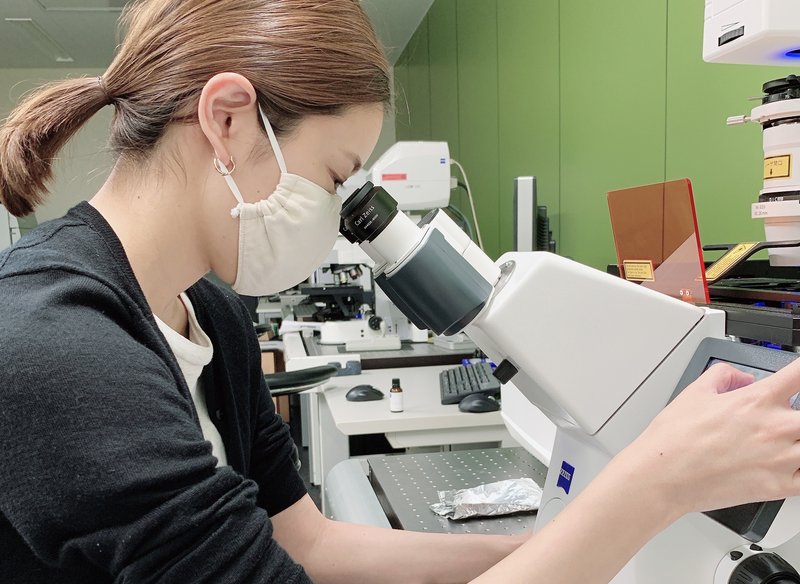
Iwasaki in the laboratory at WPI-IIIS, 2020. She has pursued sleep-related research consistently since her undergraduate years at the University of Tsukuba.
(Photo: Iwasaki Kanako)
“Under One Roof”: The Dynamic Fusion of Diverse Fields
The year Iwasaki joined WPI-IIIS, research facilities for sleep science scattered across the Tsukuba campus were collected into a single research building, a consolidation that embodied the WPI concept of “Under One Roof” and dramatically accelerated the pace of her research.
“A wide range of sleep specialists work at WPI-IIIS, and I was able to learn from and conduct research with them. I studied with a specialist in electrophysiology, and during the work that led to our Nature paper, I conducted experiments with a principal investigator from another part of the institute and made direct use of shared data. Having co-researchers just one flight of stairs away made a real difference, creating the kind of environment that makes it possible to produce results,” she asserts.
WPI-IIIS also possesses cutting-edge facilities. High-performance experimental and analytical equipment is flexibly shared across the institute, ensuring that researchers are never constrained by access to tools, she says.
“Abundant resources such as high-quality microscopes were freely available, and it was a genuinely high-level and privileged research environment. When I wanted to conduct a specific experiment, there was sure to be someone in the same building with the necessary skills and equipment. It was an invaluable environment for a researcher.”
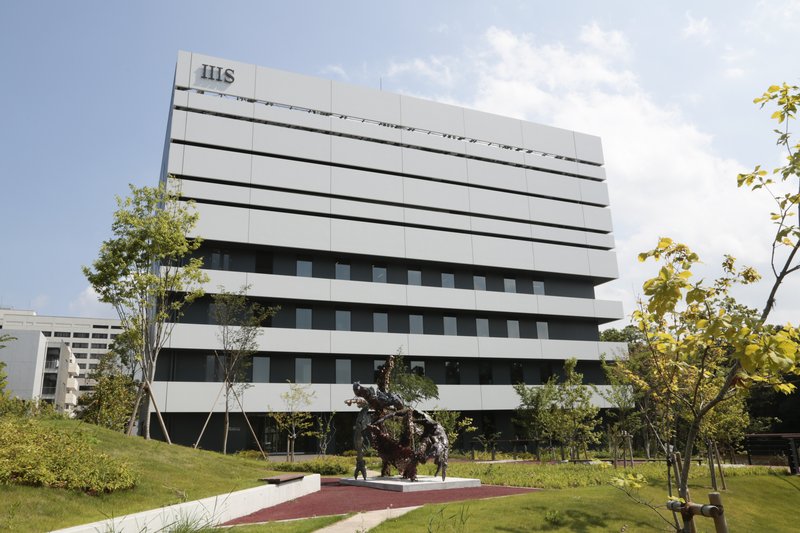
WPI-IIIS encourages borderless exchange between members of its many laboratories and operates on an “open laboratory” system, where research devices and spaces are flexibly shared. (Photo: WPI-IIIS)
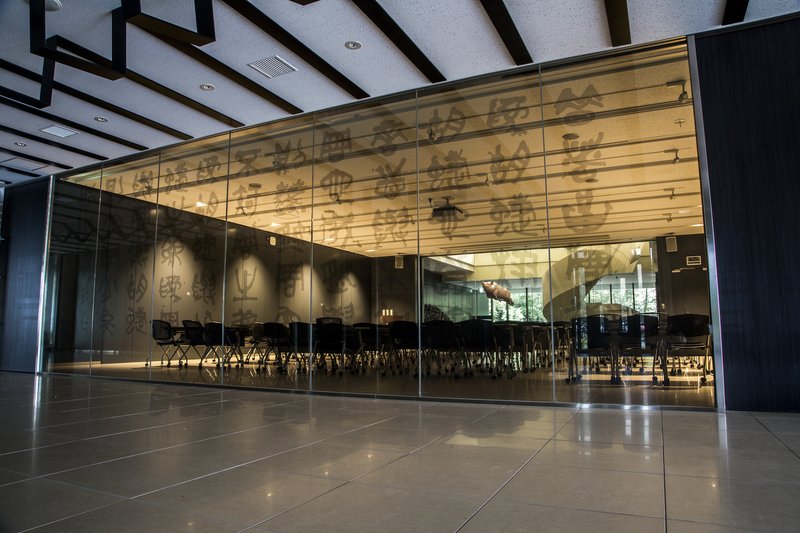
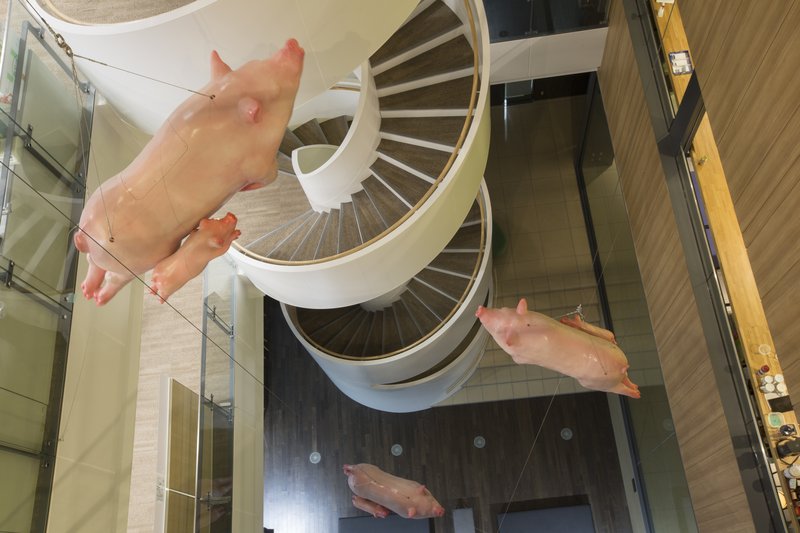
Shared spaces in the research building feature artworks created at the School of Art & Design, University of Tsukuba. Not only are the spaces relaxing, but their playfulness can also trigger new insights. (Photo: WPI-IIIS)
A Mindset Nourished in a Highly Globalized Environment
One defining feature of WPI-IIIS is its deep commitment to globalization. Over 40% of researchers are of non-Japanese nationality and English is the lingua franca. From daily meetings to symposiums, all communication is conducted in English.
“My colleagues came from all around the world and my professors also had abundant experience abroad. I naturally developed the ability to participate in discussions in English and to view my own research and career from a broader, more globalized perspective,” Iwasaki reflects.
Through weekly meetings, paper-reading sessions, and the annual symposium, Iwasaki was immersed in a global research culture on a daily basis, which helped refine her professional presence as a researcher.
Relationships between researchers were also cultivated at WPI-IIIS’s unique “Brie and Bordeaux” gatherings. These were informal, bimonthly research presentations, where researchers and staff came together in the evening for discussions over wine and cheese. These events sometimes attracted as many as 80 participants.
“Even a top-tier professor like Professor Yanagisawa talked with young fellows of the different groups for a few hours, with a face slightly flushed from wine,” recalls Iwasaki with a laugh. “There were people in the building I rarely had a chance to encounter, but events like Brie and Bordeaux made it possible to link up with them casually, outside laboratory walls.”
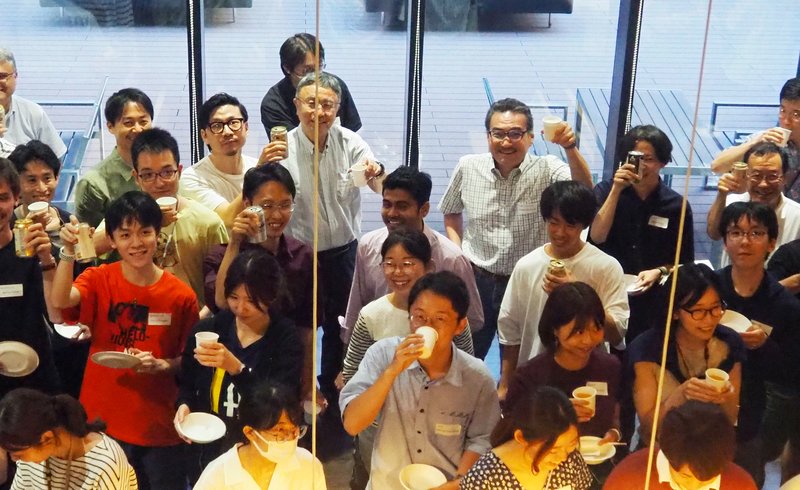
A Brie and Bordeaux event in 2023. For Iwasaki, informal opportunities of this kind to connect with other researchers were a welcome source of fun.
(Photo: WPI-IIIS)
Nurturing World-Class Researchers
Iwasaki is currently pursuing sleep research at Stanford University from a different angle, focusing on the relationship between inflammation and sleep. The pivotal experience leading to this new career path was a four-month study program at the University of Bordeaux in France, a chance afforded her by University of Tsukuba while she worked toward her master’s degree.
“That experience taught me that the nature of research is the same wherever you are. I used to think that researchers and professors were special people who belonged to a separate world from mine, but discussing issues with world-class researchers at WPI-IIIS, conducting research with them, and witnessing up close how hard they worked behind closed doors, I realized that I too had the option of making the same kind of effort,” confides Iwasaki.
The decisive factor that spurred her abroad was the WPI-IIIS travel grant, enabling her to observe laboratories overseas. WPI-IIIS actively encourages and supports young researchers who take part in international conferences, visit leading laboratories abroad, and expand their global research networks. Iwasaki had personal contact with top-tier researchers from her student days, and opportunities to speak with them directly. With the institutional support of WPI-IIIS firmly behind her, she was able to pursue her present position with confidence.
“Even when I was not quite sure of myself, I was able to work alongside people I admired, and I gradually approached their world by adopting their attitude. Looking back, I realize that I am where I am today because they nurtured me the way they did.”
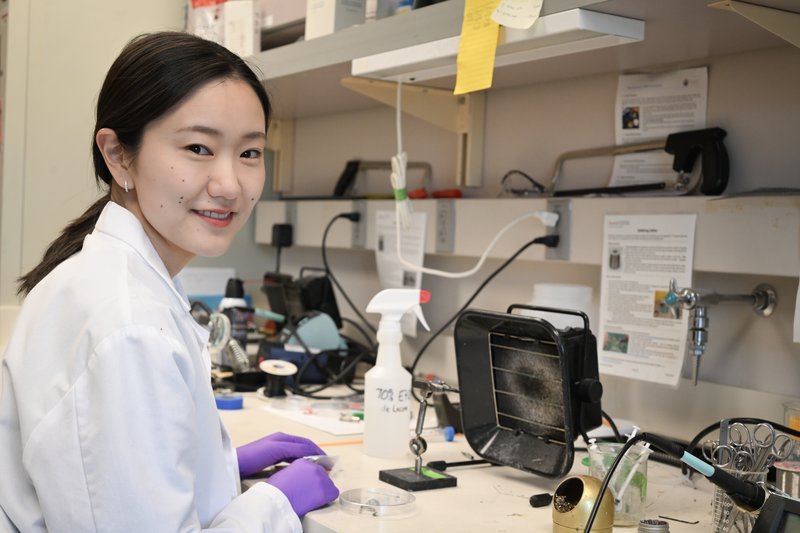
Iwasaki in the laboratory at Stanford University. She credits her experience at WPI-IIIS with keeping her motivation high as she continues her research.
(Photo: Iwasaki Kanako)
At WPI-IIIS, Iwasaki acquired the intellectual foundation to engage with the global scientific community—and continues her pursuit of the fundamental mystery of sleep.
IWASAKI Kanako
B.Sc., University of Tsukuba School of Life and Environmental Sciences (2016)M.Sc. in Medical Sciences, University of Tsukuba Graduate School of Comprehensive Human Sciences (2018)
Ph.D. in Medical Sciences, University of Tsukuba Graduate School of Comprehensive Human Sciences (2022)
Postdoctoral Researcher, WPI-IIIS, University of Tsukuba (2022–2023)
Postdoctoral Researcher, Stanford University (2023–)
JSPS Overseas Research Fellow (2024–)