
- HOME
- Careers
- Researchers' Voices
- Exploring Virus-Derived Genes in Developmental Research:
Fiona Quirion at Keio University WPI-Bio2Q
Exploring Virus-Derived Genes in Developmental Research:
Fiona Quirion at Keio University WPI-Bio2Q
Apr 17, 2026
Exploring Virus-Derived Genes in Developmental Research: Fiona Quirion at Keio University WPI-Bio2Q
German scientist Fiona Quirion is a STaMP Research Assistant at Keio University Human Biology-Microbiome-Quantum Research Center (WPI-Bio2Q), where she studies the roles of virus-derived genes—known as endogenous retroviral elements (ERVs)—embedded in the human genome and how they contribute to embryonic development and cellular regulation. Quirion spoke to us about how WPI-Bio2Q’s interdisciplinary research environment—driven by cutting-edge technologies such as AI and quantum computing—has supported her work and inspired new ambitions for her future career.
Note: Interviewed in January 2026. Positions and titles are current as of the time of the interview.
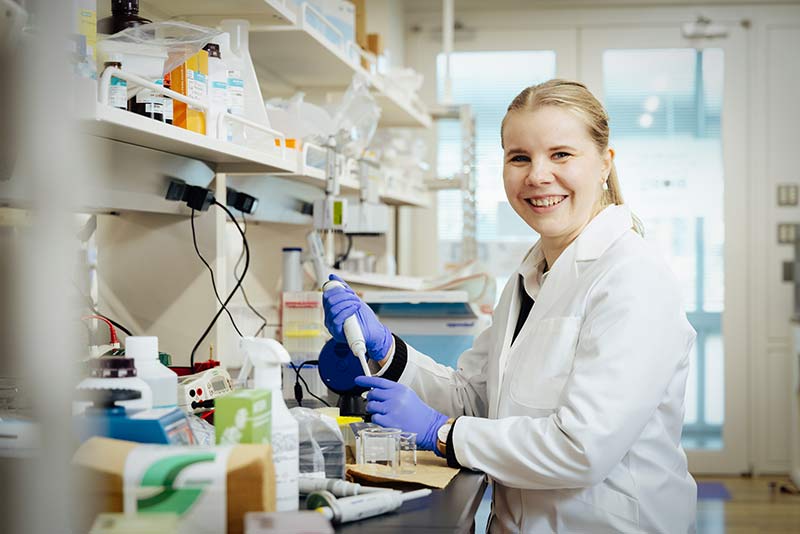
Fiona Quirion, a STaMP Research Assistant at Keio University Human Biology-Microbiome-Quantum Research Center (WPI-Bio2Q). She is also a Visiting Researcher at Chiba University, Next Generation In Vivo Research Exploratory Center (cNIVR).
The “Embryonic Development” of WPI-Bio2Q
The human genome contains a significant number of viral genes incorporated early in our evolutionary history, known as endogenous retroviral elements, or ERVs. Scientists used to think that these ERVs were suppressed by our bodies to protect us from health risks, but more recent research has shown that some ERVs are actually essential to the early stages of embryonic development. Quirion conducts research into how ERVs function, how they are regulated, and their surprising connections to other bodily processes such as gut inflammation.
Drawn to science since childhood, Quirion earned a B.Sc. in Applied Life Sciences before beginning an M.Sc. in Human and Molecular Biology at Saarland University in 2021. One year into her master’s, however, her husband was informed of an upcoming transfer out of Germany for work. After considering the options together, she decided to move with him to Japan. “We talked to others who had experienced similar things, and no one had anything bad to say about Japan,” she laughs.
Faced with the daunting task of finding a way to complete her master’s in her new home, Quirion came across SIOMI Haruhiko’s lab at Keio University. “When I emailed him, he replied the next day inviting me to come,” she says. “He was very flexible and welcoming.”
What Quirion had yet to realize was that Siomi’s role as Administrative Director of WPI-Bio2Q, a research center launched in 2022 at Keio University, would give her front-row seats as the nascent institution was finding its feet.
WPI-Bio2Q was launched with the goal of using quantum computing and AI to analyze the interaction between human biology and the microbiome, revealing uncharted territory within human biology and helping to develop treatments for intractable diseases. When Quirion started her research at Siomi’s lab, the center was in its first year of operation. The following year, in 2023, it launched the Bio2Q Science Meeting series. Siomi invited Quirion to attend, and she found the research presentations and collaborative discussions there helpful to her intellectual and professional development.
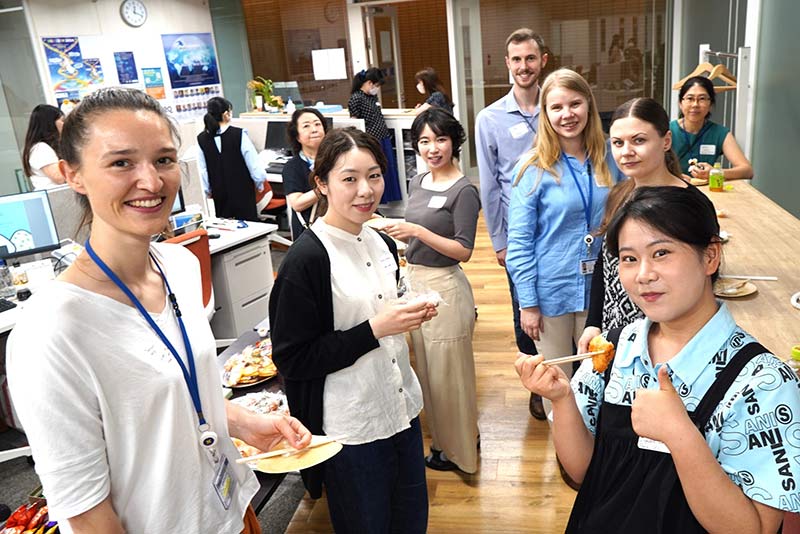
Quirion (in long-sleeved blue shirt) at the WPI-Bio2Q Social Event held in July 2024. The bi-monthly gathering brings together researchers and students from inside and outside WPI-Bio2Q for scientific discussion and the sharing of research progress. (Photo: WPI-Bio2Q)
An Interdisciplinary Environment with Support for Everyday Living
Quirion’s research involved using cutting-edge tools like NGS (Next Generation Sequencing) and CRISPR to alter and investigate DNA. At WPI-Bio2Q, she enjoyed stimulating conversations with scholars in many other fields, from neuroscientists, pharmacists, and chemists to experts in AI and quantum computing. The center brings together world-leading experts in these fields and promotes interdisciplinary research between three research cores—Multidimensional Data Analysis, Homeodynamics and Mechanistic Analysis, and Quantum Computing—leveraging the latest technologies.
WPI-Bio2Q also made the process of starting a life in Japan easier. “My visa situation was somewhat unique, but the support staff at WPI-Bio2Q knew exactly what to do,” says Quirion. “They helped me with everything from filing employment paperwork to helping me find an apartment downtown.”
Today, roughly half of WPI-Bio2Q’s researchers come from overseas, and the center continues to evolve to support this growing international community. English has been the official language since the center was founded, and it is now being successfully integrated into the meetings of several labs, ensuring that more attendees can contribute.
Quirion has also witnessed more subtle cultural shifts within the research environment. “In the early days, the labs tended to be very quiet,” she says. “As more international researchers joined, casual conversations became more common, and Japanese colleagues began to take part as well. In this kind of environment, you naturally learn about each other—the influence goes both ways.”
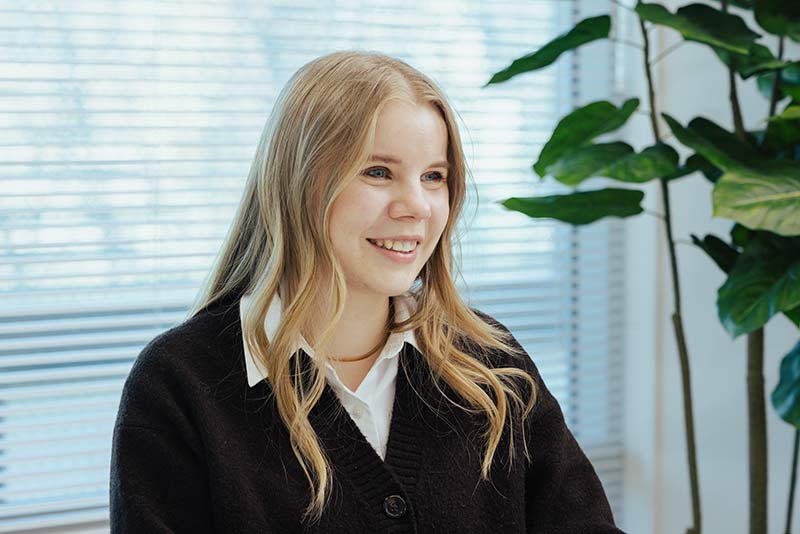
Quirion notes that as the number of international researchers increased, the proportions of Japanese and non-Japanese researchers became roughly equal over time.
Broader Networks for Broader Minds
When Quirion finished her master’s degree and was researching Ph.D. programs, her advisor recommended that she join a graduate program at WPI-Bio2Q called Science and Technology and Medicine, Pharmacy (STaMP). The program is run in English as a joint initiative between the Graduate Schools of Medicine, Pharmaceutical Sciences, and Science and Technology. This enables each graduate student to work with multiple mentors and receive guidance that transcends school boundaries.
Ultimately, Quirion decided to stay at WPI-Bio2Q for two main reasons. The first was its international character. “You can get to know Japanese people, but you also have support from other international researchers,” she says. “There’s a sense that people around understand you.”
The second reason was WPI-Bio2Q’s focus on interdisciplinary collaboration and network-building. “I’ve met so many friends and colleagues here,” Quirion says. “Even when they leave for other institutions, we still discuss things and keep in touch.”
Quirion also had the opportunity to attend a week-long summer school in Beijing last year, hosted by Peking University Health Science Center, on the topic of AI in medicine. Normally, she says, she wouldn’t even have applied—but learning about AI at WPI-Bio2Q had convinced her that she needed to stay on top of the topic.
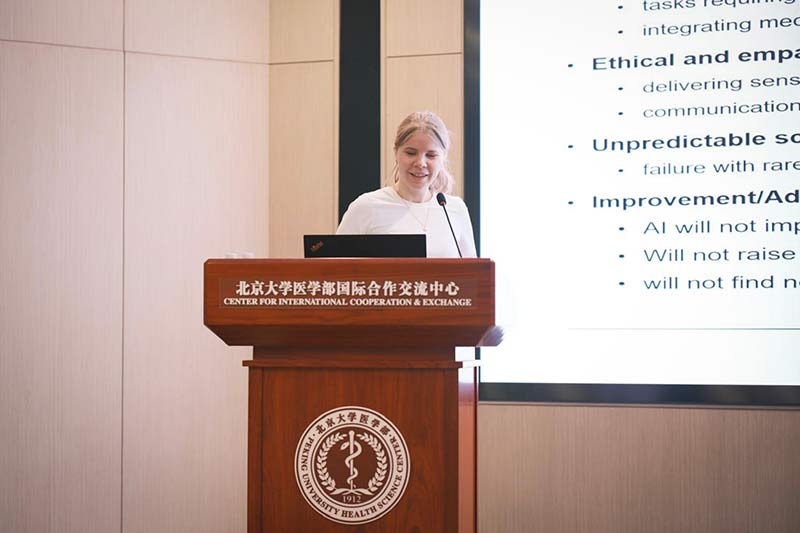
Quirion presenting at Joint Summer School 2025, an international joint program among the Keio University Graduate School of Medicine, Karolinska Institute, King’s College London, and Peking University Health Science Center. (Photo: Ranlyu Zhu)
Preparing for a Future Inside or Outside the Academy
At present, Quirion is continuing her Ph.D. program at Keio University and her STaMP Research Assistant role at WPI-Bio2Q, and also working as a visiting researcher at Chiba University (cNIVR), where Siomi established a new laboratory. She has yet to decide on her future path, but appreciates the options that her time at WPI-Bio2Q has opened for her.
“At WPI-Bio2Q, I’m learning how a research center is built from the ground up, but I also see the industry side,” says Quirion. “I’ve met people who have their own companies or startups on the academic path, which is inspiring.”
Overall, Quirion is highly positive about WPI and Japan as a center for scientific research. “I’d certainly recommend taking the opportunity to work at a WPI center,” she says. “The support is great, and having that community helps a lot. There’s great science being done here. I presented a poster at the Molecular Biology Society of Japan conference in Yokohama in December 2025, where there were 900 research posters on display. I also helped to organize a WPI-Bio2Q International Symposium, which included presentations by leading domestic and international scientists and a poster session for younger researchers. That was a valuable experience.”
Asked for her advice for those considering coming to Japan, Quirion says, “The first year will be a culture shock, but it’s important to be outgoing—to approach people and build your community. Over my time here, I’ve become quite proactive!”
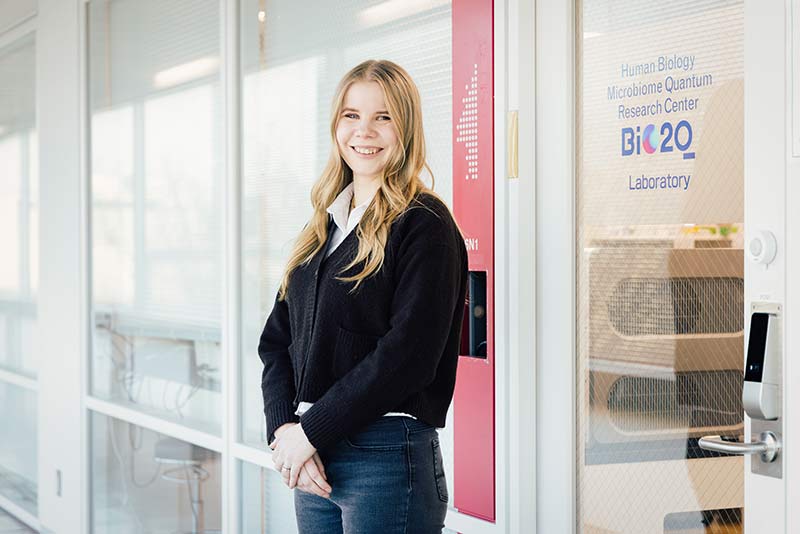
Fiona Quirion
B.Sc. in Applied Life Sciences, Kaiserslautern University (2017–2021)M.Sc. in Human and Molecular Biology, Saarland University (2021–2023)
Ph.D. in Molecular Biology / Microbiology & Immunology, Keio University (2024–)
STaMP Research Assistant, WPI-Bio2Q, Keio University (2024–)
Visiting Researcher, cNIVR, Chiba University (2025–)