
- HOME
- Careers
- Researchers' Voices
- Breaking Boundaries in Kyoto: Global Minds Driving Scientific Horizons: MATSUI Risa at WPI-iCeMS
Breaking Boundaries in Kyoto: Global Minds Driving Scientific Horizons: MATSUI Risa at WPI-iCeMS
Apr 10, 2026
Breaking Boundaries in Kyoto: Global Minds Driving Scientific Horizons: MATSUI Risa at WPI-iCeMS
Raising the banner of merging chemistry and cell biology, the Institute for Integrated Cell-Material Sciences (WPI-iCeMS) at Kyoto University has been pioneering research in life and materials sciences. For nearly a decade, this vibrant hub has been home to MATSUI Risa, who began her journey at Kyoto University as an undergraduate. How did WPI-iCeMS shape her international outlook and empower her to embrace bold challenges in her career? Here is the story of how one researcher’s journey reflects the institute’s international research environment.
Note: Interviewed in December 2025. Positions and titles are current as of the time of the interview.
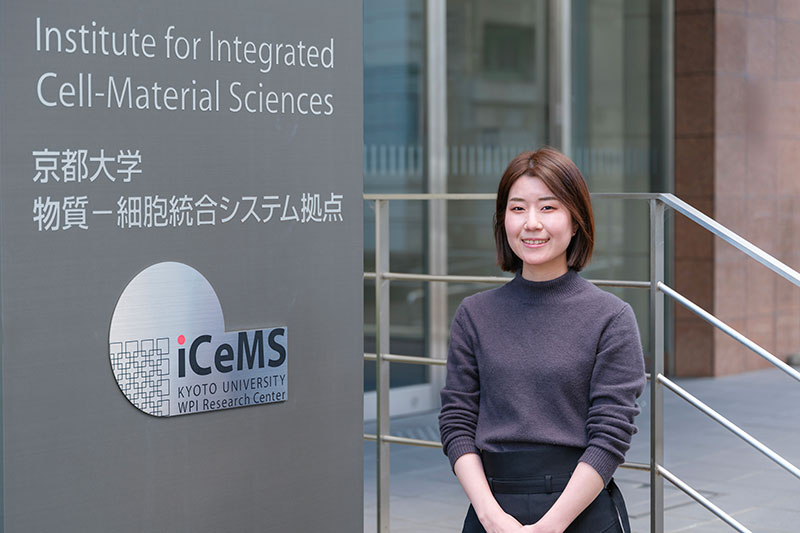
MATSUI Risa, Ph.D. candidate at the Institute for Integrated Cell-Material Sciences (WPI-iCeMS).
Pursuing the Riddle of Cell Membranes
Matsui did not originally harbor strong ambitions of becoming a researcher. Her aspirations took shape gradually through experience. As a first-year undergraduate at Kyoto University’s Faculty of Agriculture, she learned that WPI-iCeMS was looking for a research assistant. This made her wonder whether conducting experiments could be enjoyable—an innocent curiosity drew her into a world that profoundly changed her life.
“I was awestruck when I extracted DNA from a cell using a kit. Information I had only known on paper from textbooks suddenly appeared before my eyes in a tangible form, something I could hold in my own hands.”
WPI-iCeMS at Kyoto University is renowned as an international research center that integrates cell biology and materials science to understand life’s mechanisms and create new materials and technologies.
Since its establishment in 2007 as an international research center under WPI, WPI-iCeMS has achieved remarkable results, with the aim of generating new technologies by integrating cell biology and materials science. Matsui joined the Jun Suzuki Lab at WPI-iCeMS during her master’s studies at the Graduate School of Biostudies, Kyoto University. Today, she is engaged in research that seeks to unravel the role of genes in unexplained biological phenomena.
“For example, unlike applied research with clear goals such as cancer treatment, our realm is basic research that begins by giving meaning to phenomena—in other words, exploring their value. Being the first to uncover a truth unknown to anyone: that is the foremost appeal of this research.”
At this scientific frontier, Matsui focuses on cell membrane lipid dynamics and the behavior of membrane proteins. Embedded in the membranes of the cells comprising our bodies are a wide variety of membrane proteins that transport molecules into and out of the cell, receive external signals, and regulate cellular homeostasis. The Jun Suzuki Lab is a world-leading team in research on the dynamics of membrane lipids and the proteins that govern them.
How do membrane proteins and lipids coordinate their functions within the crowded and dynamic environment of the cell membrane? How can subtle changes in membrane organization give rise to distinct cellular activities? For seven years, Matsui has been unravelling how specific protein complexes influence lipid distribution and membrane-associated functions.
“At first, it was a total mystery. But by diligently conducting experiments one by one, I’m now finally seeing their meaning—how what once seemed like an isolated phenomenon actually plays a defined role in the body.”
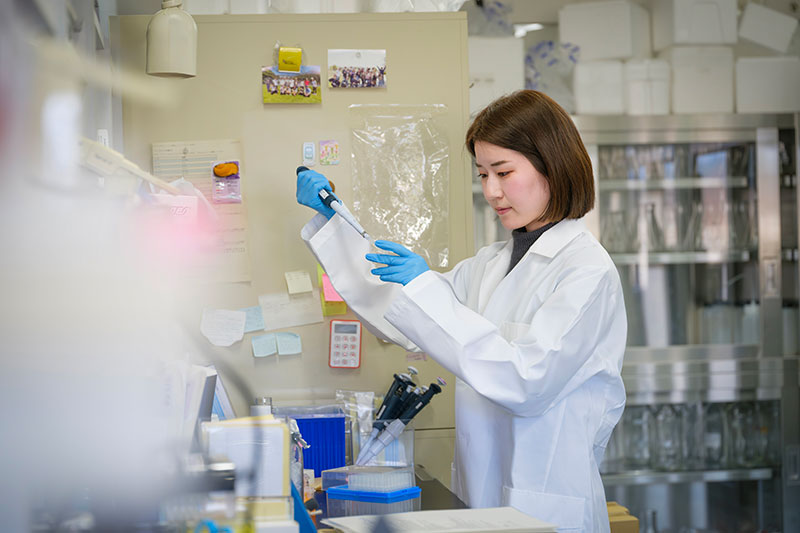
At the Jun Suzuki Lab, Matsui conducts basic research on cell screening and membrane proteins.
A Global Mindset Shaped by WPI-iCeMS’s International Community
In line with WPI’s vision of creating hubs for global brain circulation—the fluid exchange of talent across borders—has been a core concept of WPI-iCeMS since its inception. About half of its members come from overseas, distinguishing it from many other Japanese university research institutes. In an environment where both daily conversation and research discussions are conducted primarily in English, Matsui experienced a profound shift in mindset. Through interactions with overseas members who held diverse values and perspectives, she was inspired to speak up more actively.
“It is thanks to this environment that actively deepening exchanges with researchers worldwide has become a natural part of my continuous career path.”
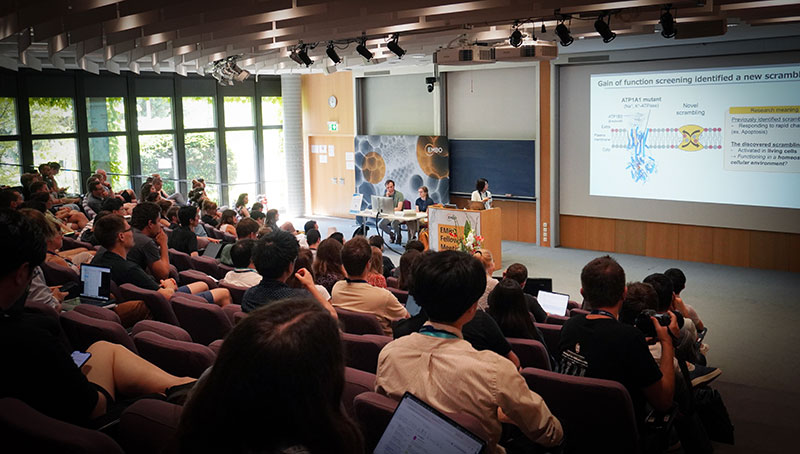
Matsui giving a presentation as a member of WPI delegates at the European Molecular Biology Organization (EMBO) Fellows’ Meeting held in Germany. The meeting brought together young researchers from more than 30 countries.
Supporting Researchers from Global Collaboration to Startup Creation
In June 2025, Matsui attended the European Molecular Biology Organization (EMBO) Fellows’ Meeting in Heidelberg, Germany, as one of the WPI delegates. There, she delivered a flash talk and engaged with EMBO postdoctoral fellows and researchers from other WPI centers.
She also leveraged her time in Germany to reach out to German laboratories supported by the WPI-iCeMS Overseas Lecture Tour Grant, which helps researchers build international networks. She even secured job interviews, an experience that significantly boosted her self-confidence.
“The level of research in Europe is certainly high, but seeing it firsthand made me realize something important: the research environment I grew up in at WPI-iCeMS already operates at a truly international level. The research style I cultivated there can thrive on the global stage. That conviction was the greatest reward of my visit.”
In addition to supporting international engagement, WPI-iCeMS offers excellent facilities such as the iCeMS Analysis Center equipped with super-resolution microscopes, as well as the iCeMS Venture Studio, which supports multiple startups under a single framework. Industry-academia collaboration experts and legal specialists serve as partners to reduce the burden on researchers launching startups. “My professor has launched a startup based on research conducted in our laboratory, and being able to observe firsthand how to navigate industry partnerships has been extremely valuable for my career,” Matsui says.
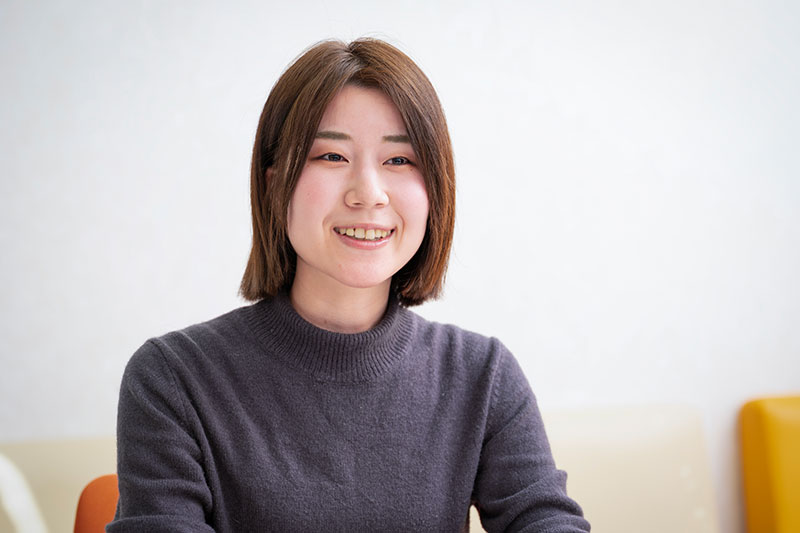
Confronted with Germany’s world-leading research environment, Matsui recalls thinking, “Our work truly belongs on the global stage,” affirming that her daily research at WPI-iCeMS meets global standards.
An Environment Without “Walls” Accelerates Interdisciplinary Integration
The appeal of WPI-iCeMS extends beyond overseas travel support. Researchers are nurtured within an ecosystem designed to foster interdisciplinary integration.
“WPI-iCeMS is laid out as an open office, with no walls between labs. When you hit a dead end with a biological approach, you can simply turn to a chemist sitting right next to you. Professors’ offices are also easily accessible, and routine exchanges across disciplines are part of daily life.”
Another initiative that accelerates integration is the annual overnight retreat, where all WPI-iCeMS members come together. In a relaxed and convivial atmosphere where the director, principal investigators, and students mingle freely, insights from someone working in a completely different field can spark breakthroughs for vexing problems.
“At WPI-iCeMS, I have been surrounded by researchers from a wide range of disciplines. Once, a researcher who studies protein behavior using computational simulations suggested that this approach might allow me to visualize the dynamics of my own proteins. We also share our concerns about building our careers. I’m sure that having a broad horizontal network will be an asset when applying for collaborative research funding and launching large-scale projects in the future.”
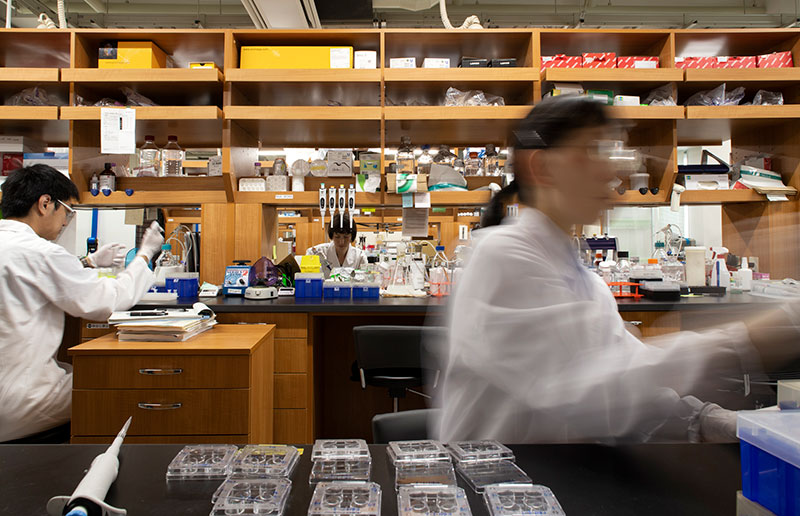
WPI-iCeMS adopts an open-lab layout, fostering an environment where lively discussion and exchange can emerge across disciplinary boundaries.
An Overseas Step as the Next Challenge in an Ever-Evolving Career
Matsui is now considering her next stage: joining a laboratory in Taiwan. She first connected with the lab during a visit to Academia Sinica, where WPI-iCeMS operates an on-site laboratory and where she gave a presentation.
“I’m thinking of embracing a slightly different field next—’protein engineering.’ It is not simply about studying phenomena, but about redesigning functions for specific purposes. This is a field I became newly interested in through interactions with chemists at WPI-iCeMS.”
The global research network cultivated by WPI opens doors to new research possibilities and fosters the development of world-class researchers. Support for securing research funds, flexible assistance for overseas travel, and a daily international research environment are organically connected. In Kyoto—a city steeped in tradition—cutting-edge intellect transcends national borders and disciplines, extending toward uncharted scientific frontiers.
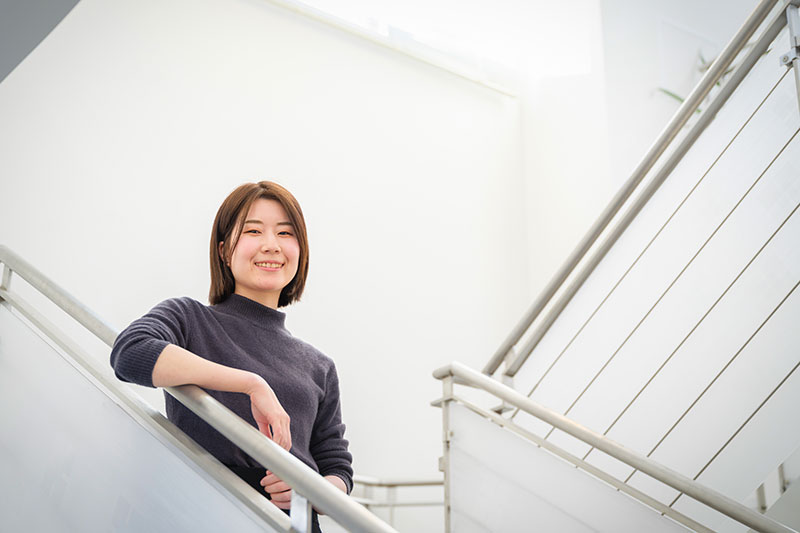
Matsui notes that working at WPI-iCeMS, where biology and chemistry converge, sparked her interest in biomanufacturing and structural modification through chemical approaches.
MATSUI Risa
B.Sc. in Bioresource Science, Faculty of Agriculture, Kyoto University (2019)M.Sc. in Biostudies, Graduate School of Biostudies, Kyoto University (2021)
Completed doctoral coursework, Graduate School of Biostudies, Kyoto University (2024)
Researcher, Jun Suzuki Lab, Kyoto University WPI-iCeMS, Kyoto University (2024–)
Ph.D. Candidate, Kyoto University