
- HOME
- Careers
- Researchers' Voices
- Tracing the Mechanisms of the Biological Clock through Interdisciplinary Science:
Senthilvadivel Vajravijayan at WPI-ITbM
Tracing the Mechanisms of the Biological Clock through Interdisciplinary Science:
Senthilvadivel Vajravijayan at WPI-ITbM
Apr 22, 2026
Tracing the Mechanisms of the Biological Clock through Interdisciplinary Science: Senthilvadivel Vajravijayan at WPI-ITbM
How is the “biological clock” built into our bodies generated at the cellular level, and how does it influence physiological functions? Senthilvadivel Vajravijayan is a postdoctoral researcher in the Hirota Group (collaborating with USC Professor Steve A. Kay) at the Institute of Transformative Bio-Molecules (WPI-ITbM), Nagoya University, where he studies the molecular mechanisms underlying our circadian rhythms. Having established his foundation as a researcher in India, what led him to choose a WPI center in Japan for his postdoctoral research? Vajravijayan spoke to us about his career choices, his current research environment, and the passion that drives his work.
Note: Interviewed in January 2026. Positions and titles are current as of the time of the interview.
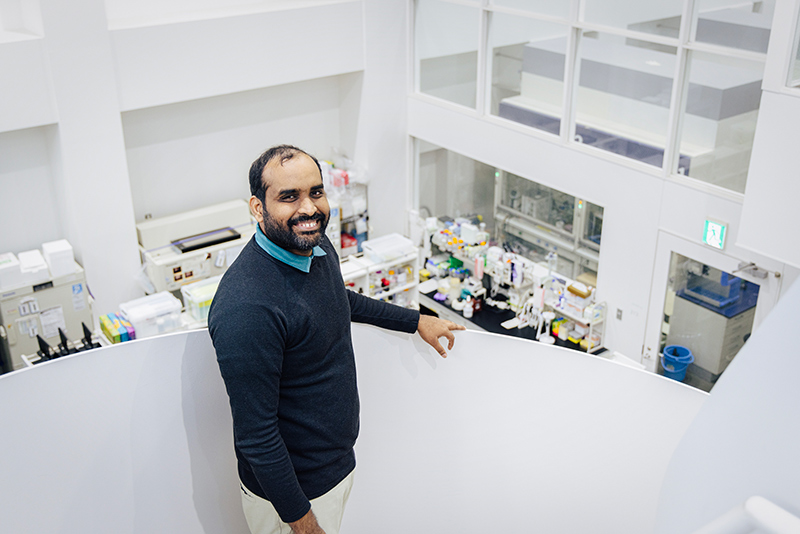
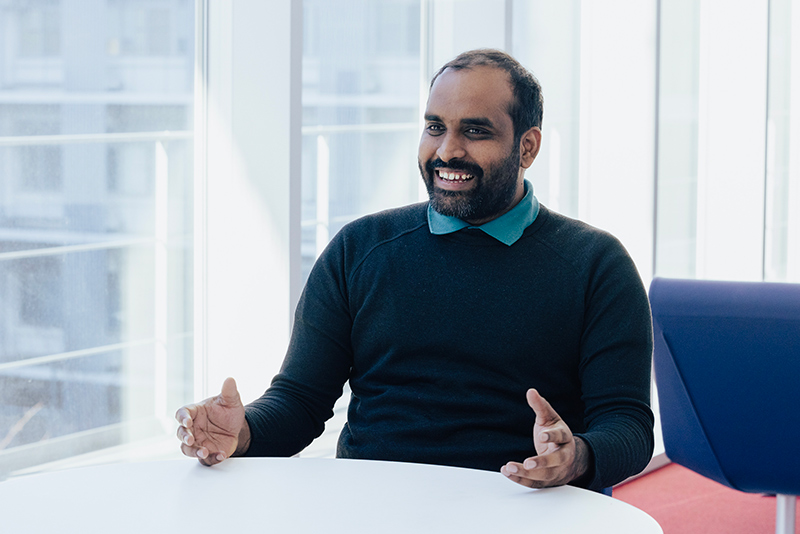
Senthilvadivel Vajravijayan, Postdoctoral Researcher at the Institute of Transformative Bio-Molecules (WPI-ITbM), Nagoya University.
Telling Time at the Atomic Scale
“Many aspects of physiology are connected to circadian rhythm,” says Vajravijayan.
Circadian rhythms are roughly 24-hour biological cycles found in nearly all living organisms, including humans. They govern a wide range of physiological processes, such as brain activity, hormone secretion, cellular regeneration, and many other vital functions, and play a central role in shaping patterns of sleep and feeding. At WPI-ITbM, Vajravijayan studies these rhythms at the most fundamental level: the atomic structure of circadian clock proteins.
“When circadian rhythms are disrupted—by jet lag or changes in daily lifestyle, for example—it is known to trigger a range of non-communicable diseases,” Vajravijayan explains. “These include conditions such as cancer, diabetes, and problems related to neural plasticity. We are highly motivated to develop drugs that can restore these rhythms to their normal state. That is our ultimate goal.”
Life Inside an Interdisciplinary Institute
Since arriving at WPI-ITbM in October 2022, Vajravijayan has immersed himself in a research environment designed to break disciplinary boundaries. Structural biologists, chemists, physicists, and plant scientists share open office spaces in the institute’s mixed lab system, alongside researchers and technicians from Japan, China, Thailand, Malaysia and the US.
“The power of WPI-ITbM lies in the way diverse disciplines and people from different backgrounds are structurally integrated,” he says. “Everyone looks at the same molecule from a different perspective. That allows us to ask new questions we would not have thought of otherwise.”
This environment offers Vajravijayan a high degree of freedom, with tangible scientific outcomes. Through collaboration with plant scientists, he recently co-authored a paper in Nature Communications examining stress tolerance in plants by analyzing protein–peptide interaction thermodynamics—research that would have been unlikely in a more siloed setting. “This type of collaboration is strongly enabled by the WPI system,” he notes.
The institute’s infrastructure also accelerates research in dramatic ways. WPI-ITbM houses extensive chemical compound libraries and robotic screening systems that can compress years of work into days. “Some projects that might take months or years elsewhere can be accelerated dramatically here,” Vajravijayan says.
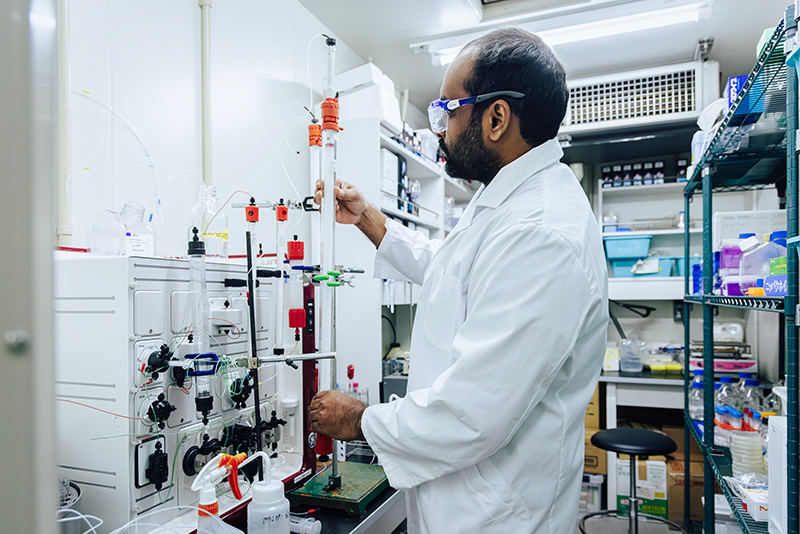
His research group includes researchers and students from China and Indonesia. He says the diverse and inclusive environment enables open and effective communication, without him being conscious of nationality.
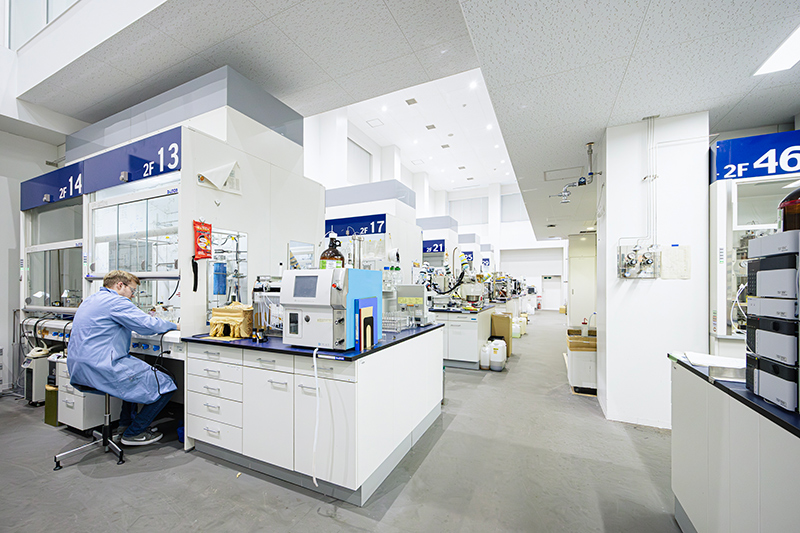
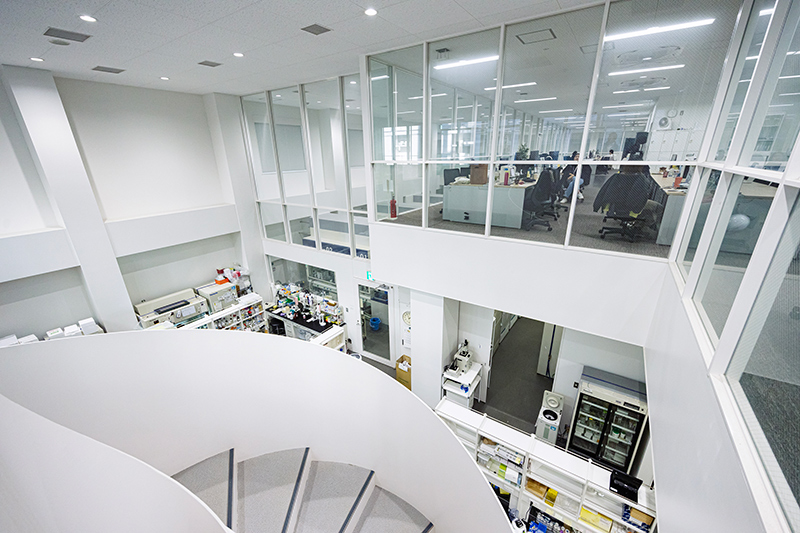
The Mix Lab and Mix Office, laboratory and office spaces designed without barriers between research groups to promote interdisciplinary collaboration. Researchers and students from different fields share the same space, fostering daily exchange of ideas and discussion.
From Observing Nature to Visualizing Atoms
Vajravijayan’s path into structural biology was anything but linear—it began with plants. Growing up in India, he was drawn more to nature than numbers. “Initially, I hated mathematics,” he recalls with a laugh.
After studying plant science through his undergraduate and master’s degrees, he encountered structural biology—a field that allowed him to observe molecular interactions at the atomic level. “I have always interpreted things visually,” he explains. “Structural biology lets you actually see what is happening at the atomic scale, and that fascinated me. Fortunately, the university where I studied had both a renowned plant science institute and a structural biology institute.”
Embracing mathematics along the way, he went on to earn a Ph.D. from the University of Madras. His doctoral research combined plant science with structural biology techniques, laying the foundation for a career that now bridges molecular structure, biophysics, and human health.
Science with Social Impact
Vajravijayan completed his Ph.D. during the COVID-19 pandemic, an experience that deeply influenced how he viewed science and its responsibility to society. Rather than immediately moving abroad for a postdoctoral position, he chose to join Don Bosco College of Agriculture as Assistant Professor and Project Coordinator of the Climate Smart Agriculture Program, a collaborative initiative supported by the German Federal Ministry for Economic Cooperation and Development (BMZ) in India. There, he taught biochemistry and engaged directly with farmers, strengthening his commitment to science that addresses practical and societal needs.
Inspired by FUKUOKA Masanobu’s The One-Straw Revolution, he helped adapt Japanese organic farming principles to local conditions in northern Tamil Nadu. Over two years, the program trained more than 15,000 farmers, significantly reducing water use while increasing crop yields. This experience deepened his interest in interdisciplinary research and ultimately motivated him to seek an international research environment.
Choosing Japan and WPI
As the pandemic began to ease, Vajravijayan started exploring postdoctoral opportunities overseas. He received offers from both the US and Japan, but what ultimately led him to choose the latter was the distinctive research environment offered by WPI-ITbM.
“I was looking for a place where I could pursue genuinely interdisciplinary research and challenge myself beyond established frameworks,” he says. “At WPI-ITbM, such exploration is not only encouraged, but fully supported.”
While searching for a postdoctoral position, Vajravijayan learned about WPI-ITbM through the Japan Society for the Promotion of Science (JSPS) website. He recalls that the interview process moved remarkably quickly: he was interviewed the day after making contact and received an offer on the third day.
Practical considerations were equally important. Relocating with his wife and six-month-old son, Vajravijayan placed great value on Japan’s reputation for safety. “Here, I can focus on my research without worrying about my family,” he says.
He adds that the strong support provided by WPI-ITbM’s administrative staff made it possible for him to begin his research almost immediately after arriving in Japan. “They helped us with everything—from finding housing to opening a bank account. It made us feel very welcome,” he recalls. “Of course, there was some culture shock at first, but we gradually adjusted. My wife also attended free Japanese-language classes at Nagoya University, where she built a community with other international residents.”
A Borderless Scientific Future
Looking ahead, Vajravijayan hopes to continue working in Japan while building a career that crosses borders. He is inspired by principal investigators (PIs) who hold positions in multiple countries, linking research ecosystems rather than choosing between them.
“I want to apply structural biology to addressing global societal challenges such as climate change,” says Vajravijayan. “If I had remained a conventional structural biologist focused only on proteins and crystal structures, I do not think I would have developed this broader perspective. The interdisciplinary environment at WPI-ITbM—along with its emphasis on independence and openness—has given me a future-oriented perspective.”
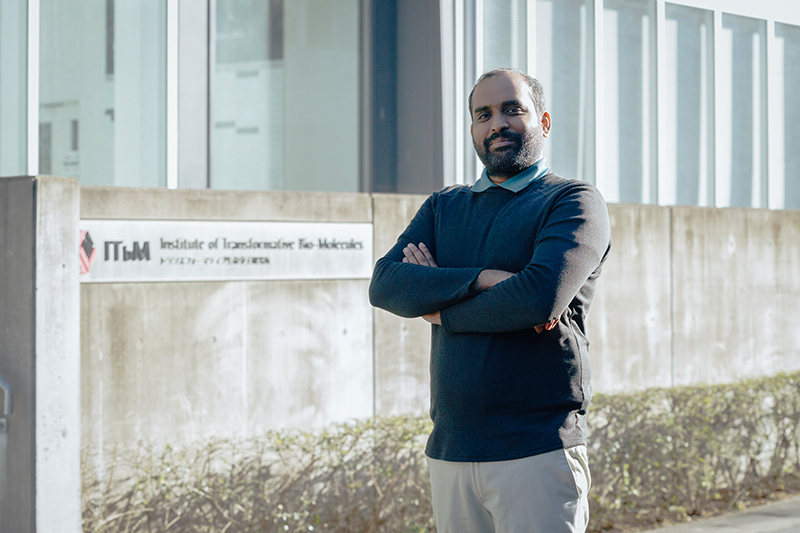
Senthilvadivel Vajravijayan
B.Sc. in Plant Biology & Plant Biotechnology, Loyola College, University of Madras (2012)M.Sc. in Applied Plant Science, Centre of Advanced Study in Botany, University of Madras (2014)
Ph.D. in Crystallography and Biophysics (Plant Science), Centre of Advanced Study in Crystallography and Biophysics, University of Madras, Guindy Campus (2016–2021)
Assistant Professor, Don Bosco College of Agriculture (2020–2022)
Postdoctoral Researcher, WPI-ITbM, Nagoya University (2022–)